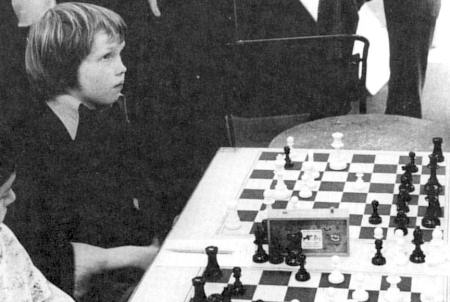
Today I was at the Australian Junior Championship in Melbourne. It is a fantastic event with hundreds of kids from across Australia playing, and the venue at Swinburne University is great. There is even an excellent cafe just across the road serving superb coffee, the Axil Coffee Roastery.
So I have been chatting to some people,and looking at some of the kids game, a pretty good way to spend some time!
The question that always interests me as a chess coach is how can you bridge the gap between teaching and engaging? How can you improve someone's game while keeping it fun? There has to be some inspiration to guide the education. For oldies like me, it can be difficult to remember exactly what I found inspirational as a child, or even a young teenager. And as times change, things that inspire can change.
One thing that is constant are the top players in the game, and talking about Wijk aan Zee and how the superstars are doing is a great inspiration for the kids. (I actually like when the Junior Champs takes place at the same time as the Senior Championship, such as kids in the morning, adults in the afternoon so the kids get to see the best players in the country in action after their own games) There is no bigger superstar at the moment than Magnus Carlsen, so he is currently the biggest inspiration to kids in chess. On my recent trip to NZ I saw a book about Magnus that I nearly bought...
I didn't see much chess, but I learned that Magnus is keen to ride a motorcycle and go punk!
I took a look at my life now that I live in the country, and I finally decided to switch clubs from Melbourne to Box Hill. I have entered the next Friday night Box Hill tournament, the Autumn Cup which starts on 26 January, and I'll start writing about this as it happens. I won't stop writing about MCC which I have a great fondness for, and I'll try to play a weekend event or two this year.
Anyway, I'll be back to chess blogging as well!
Showing posts with label carlsen. Show all posts
Wednesday, January 17, 2018
Sunday, August 6, 2017
Those Annoying Time Zones
The worst thing about living in Australia is the time zone differences with Europe and America where many important events happen. I'm not going to stay up into the middle of the night to watch Federer win Wimbledon, or Usain Bolt run the 100 metres in the World Championship. I can see the replays the next day, but it just isn't the same. Similarly with chess, I generally play catch up with events the day after they happen, which isn't bad in terms of keeping up to date, but it still isn't the same as watching some live chess.
While this is usually the case, I have been rather fortunate with the Sinquefield Cup. While I can't see the start of the games, I am able to catch the end of the games when I wake up in the mornings. For me this is far more preferable than catching a few opening moves before having to leave the games as they start to get interesting. So far, I've eagerly followed 3 endgames from the event. The amazing finish to Aronian-Caruana in round 2 had me spellbound. Anand's defence against Carlsen in the following round had me thinking abut my own technique. And then this morning, I wake to find the game Vachier Lagrave-Carlsen in full swing when Carlsen blunders to give MVL a winning endgame.
During the endgame this morning I had one of those moments where you realise that your understanding of the game is just not on a level with other players.
Now in my primitive way of thinking, black is 2 pawns up though white could win the f-pawn. However, winning the f-pawn involves trading bishop for knight which would leave a lost pawn ending where black just forsakes the h-pawn and marches the king to the queen side. So, this is an easy win and there doesn't seem much that white can do? Isn't it just time to resign?
Magnus continued with 63.b4. I was sitting at my computer watching the game, thinking a trade on b4 would probably be ok, or just advance the king to g5. If black's king can get to g3, it's game over. However, neither of these "obvious" moves would have been good enough to force a win. The only move here which leads to victory is the far from obvious 63..c4 and amazingly, that is what MVL played! Would I have played this move, or even thought of it as an option? Probably not. But a deeper look at the position makes it clear why my candidate moves aren't good enough.
63..cxb4 64.cxb4 Kg5 65.Kf2 [blockading the pawn and the g3 sqaure for black's king] 65..Kf4 reaching the following position
So the question is, how does black progress? At least one of black's pieces needs to protect the f-pawn which means only one of them can try to win white's b-pawn. But that won't happen because white's bishop will sit on c6 and eventually the b-pawn will advance to b5. Even worse, from c6 the bishop can go to e8 and win white's h-pawn!
63..Kg5 64.bxc5 bxc5 65.Bd5 Kg4 66.Kf2 Kf4
Very similar to the last position, black can make no progress. In fact, with white to move there is already a repetition likely by 67.Bf7 Kg5 68.Bd5,
So this all goes with the need for strong calculation at all phases of the game. If it is possible to see that these 2 moves lead nowhere, then the next thing to do is look for other moves. MVL's 63..c4 just loses that pawn, putting on the same colour sqaure as controlled by white's bishop. But in winning the pawn, white gives black time to mobilise their pieces, and black's knight especially, moves from its depressing defence from the the edge of the board to an attacking piece in the centre. 64.Bd5 Kf5 65.Bxc4 Kg4 66.Kf2
So far, all seems fairly natural, but what now? Black's knight has 3 squares to move to but they all appear to lose a pawn. 66..Ng2 67.Bd5 wins the f-pawn or black's knight has to return to h4. This must be bad as white's queenside pawns will start marching. 66..Nf5 67.Be6 pinning black's knight after which white will advance the queen side pawns forcing black's king to defend which allows white to win the f-pawn with and the h-pawn. So 66..Ng6! but this also loses a pawn to 67.Be6+ Kf4 68.Bf7
Black's knight is skewered to the h-pawn and black's king has taken the f4 square from it. But amazingly this position is winning, thanks to the activity of black's pieces and the advanced passes f-pawn which is being nursed to promotion. 68..Ne5 69.Bxh5 Nd3+ 70.Kf1
What a turn around in position. White has levelled the game materially, but white's king has suffered an indignity in being pushed to the back rank. White's bishop is also somewhat askew. Meanwhile, black's king is in great shape and can infiltrate further into e3 or g3 (MVL chose g3) while black's knight has transformed itself. Carlsen resigned a few moves later when the knight further improved it's position by the maneuvre Nd3-f2-e4-d2/c3 or Nd3-f2-d1-e3/c3. White would have to part with his bishop for the f-pawn nad cannot force a trade on the queen side.
Lessons learned? First, we all need to calculate stronger in all phases of the game. Second, it is wrong to make assumptions based on general concepts such as material levels. While mostly material is of primary importance, there are times when other factors need to supplant this. I know that I am overly materialistic in my games, so seeing more examples like this and trying to adopt similar ideas when appropriate can only improve my chess.
Saturday, August 5, 2017
The Most Instructive....
I'm guessing that many chess players have been following some of the top class action in the northern hemisphere's summer season. For me, the British Championship is an interesting event to follow as I know some of the players. But like many, I've been keeping an eye on the Sinquefield Cup in America with Carlsen and a group of the world's elite. The first 3 rounds have brought about much fighting chess and a joy for those players who include 1.e4 e5 in their repertoires.
However, if we mere mortals want to improve our games and learn from the best what would be the 1 thing that we should study from this tournament so far? Well, any interesting position is good to study, and non standard types of manouvres, like Aronian's 10.Rh4 from his first round game vs Nepomniachtchi is a fun move.
![]() |
| Aronian-Nepomniachtchi Sinquefield 2017 |
In answer to black's 9..Qa5 Aronian here didn't defend his a3 bishop, or retreat it, but played 10.Rh4!? which protects the bishop due to the threat of Ra4 trapping a queen. Neat!
However, openings, tricks, fanciful ideas are to my mind beautiful to see but unlikely to bring many long term benefits to the game of an average club player. No, in my opinion, the best position to learn was Anand's defence of a rook ending a pawn down against Carlsen.
I'm sure that many people reading this blog will know that this is supposed to be a draw, but I wonder how many would be confident of holding this position with white against Magnus Carlsen? Anand did it comfortably and to be honest, white is starting with the best possible pawn structure for the defence and it is impossible for black to get his rook behind the pawn before white does. But the black a-pawn will force it's way down to a2 or a3. In fact, in just another 4 moves this position was reached.
White still just has to sit and wait for black to try something and then react, but what can black do? Advance on the king side? Bring the king to the queen side? With the pawn on a3, black's king has a hiding square on a2, but white's rook will be able to take king side pawns as black won't be threatening to promote. So the other option is to advance the pawn to a2, but what then? black's rook is as immobile as white's, and if black's king comes to the queen side, it will be subject to checks that it won't be able to escape from.
Carlsen didn't give up trying, and eventually, this position was reached with black pushing his g-pawn. So what would you play here as white? What would be your candidate moves? Perhaps hxg5, or Ra7+, or even Kf3? Let's look at trading a pair of pawns as that's what we're told we should do as defenders. After 1.hxg5 fxg5
Now what? White's king is becoming more open, and what black would like to do is have his rook on a1, pawn and a2 and swing the rook over to do a check. So imagine doing nothing like 2.Kf3 Ra1 3.Kg2
Now the position is critical for white after 3..g4! If white shuffles the king, black's king will come to the queen side, while if white aims for more trades with 4.f4 exf3 Kxf3, then white's king becomes more exposed.
The whole endgame is a nightmare, and there are simplifications to other endgames that need to be understood as well. Anand's solution was excellent. If we go back a few moves:
Anand chose to play 60.g4! here. I have to admit, it wouldn't have been first among my candidate moves, but the resulting positions are all level.
If black captures hxg4, then white can play hxg5 fxg5 and Kg3 picking up one of the g-pawns before retreating the king back to the corner. Carlsen took the other way 60..gxh4 but after 61.gxh5, this h-pawn gives white sufficient counterplay. Look at the final position when the game was agreed drawn.
It is black to move and although he has an extra pawn, and 2 passed pawns, black has virtually no moves. Playing h3 will allow Kh2 when the only move is Kg8 but a repetition will occur after Rg7+ and the rook will fly back to a7.
While opening knowledge and tactical and imaginative flair are essential ingredients in a players arsenal, learning technique can help us save valuable half points, or like with Carlsen, squeeze out victories from unlikely positions. Remember that very often, the defence in the endgame is being carried out after 4, 5, 6 hours of intense concentration so it is important to keep trying and to keep putting pressure on opponent's. Here's the endgame with some notes by me. I strongly urge anyone with any chess ambition to learn the technique from Anand's play so that you can use it your own games.
Tuesday, November 1, 2016
Setting the Tone
It's November, it's World Chess Championship time! Sadly though, the match isn't really getting me that excited. I'm not sure why that is. The players aren't the most exciting I guess, and the format of just 12 games means that there will probably more emphasis on not losing than winning. Recent Championship matches haven't helped with 'attrition' being the new buzzword of these matches.
I will follow the match, and I hope for a good start to set the tone. Hopefully Magnus will play to the death in the games and I hope that both players are prepared with great ideas, and are willing to take some risks to win. I guess what I'm hoping for is something to happen early on to raise the stakes in the match.
I recently was looking at some games from the 1950 play off match between David Bronstein and Isaak Boleslavsky. Don't ask me why, I just like to look at random old games! The players had shared first at the Budapest Candidates and a match was organised in Moscow over 12 games (a further 2 were added as the match was tied after 12). Of the 14 games only 5 ended in wins, which doesn't sound too different to the matches nowadays. The match started with a bang, an amazing first game with threat after threat cranking up the pressure, ending with a nice queen sacrifice. After this first game, the match went into a kind of lock down as the next 5 games were drawn. It wasn't all boring though. Game 4 saw Boleslavsky sacrifice an exchange putting Bronstein on the defensive. Then came the next phase, with 3 victories out of 5 games, leading to an extra 2 game play off. In these last 2 games, the first was drawn, while the second was won by Bronstein who went on to play the World Championship against Botvinnik.
The first game definitely set the tone for the match. Both players were prepared to take risks to win the match, and after an early victory, it meant that Boleslavsky had to play to win in games. The play was tense, and the games are well worth looking over again. As a match that wasn't for the World Championship, it doesn't get the same coverage, but that doesn't mean it was any less exciting.
Here's the game that set the tone.
A sharp Grunfeld was the opening choice for this first game, and things got sharper when Bronstein sacrificed the exchange with 14.d5!? Boleslavsky accepted, and then grimly tried to hold on to his material lead. This variation is still topical today, but at the time it had only just been introduced into tournament practice. 14..Bxa1 15.Qxa1
White threatens to win the exchange back straight off with Bh6, so black continues 15..f6 blocking white's queen out. 16.Bh6 Qb6+ 17.Kh1 Rfd8
Cranking up the pressure. Black's bishop is attacked, but white's light squared bishop is also under threat via the pin on the d-file. 18.Rb1 Qc5 19.Bd2
The temptation to move the attacked bishop must have been strong here, but then Bb4 is very strong. Another possibility is just to give back some material by playing Nc6 when black will have rook and pawn for 2 pieces. Boleslavsky decided to keep the pressure on. 19..b6 A move which makes perfect sense, guarding the sidelined knight, and giving it an escape square on b7. 20.Bb4 Qc7 21.Rc1
Since sacrificing the exchange, Bronstein has been making threats while improving his pieces. Boleslavsky too has been answering all white's threats and is just waiting for the moment when he can take a breather and still be ahead in material. 21..Qb7 22.Qb1!
Now white threatens both a5 and e6, while white's queen protects the light squared bishop. 22..Rab8?
Boleslavsky finally blunders after an incredibly complicated sequence of moves. 22..Qd7 offered black chances, retaining the pin on the d-file. White's pieces really are running riot over the position though, so black still would have had some difficult defending to do. In the game, Bronstein took the bishop and ended up winning the game.
I have to show the end of the game though.
After his brilliant play earlier in the game, Bronstein finished in style. Here white forced resignation by playing 32.Qxf6, sacrificing his queen to let the e-pawn run.
I do hope that the upcoming World Championship lives up to the billing and produces a tense match with excellent play. But if it doesn't chess has plenty of matches to look back on and savour, and not just the World Championships.
Labels:
bronstein bloeslavsky,
carlsen,
Chess,
world championship
Tuesday, September 6, 2016
A Draw with the World Champion!
I haven't been writing here for a while which was a bit of a surprise, because just before I stopped I had a sharp increase in viewers, about an extra 5000 a day from Russia. Anyway, I've given those new guys (and bots) time to go through my blog, so I'll start posting again now. And it is a great time to be posting. Spring is rapidly coming to Melbourne, the chess Olympiad is in full swing and I'm sat outside a cafe, with a long black and an almond croissant (not good for my chances of avoiding diabetes but what the hell, it looked too good!), with Donald Trump continuing to lag in the opinion polls.
I've got quite a bit of catching up to do, especially about chess. Since I last wrote, there has been a venue found for the World Championship in New York, and Wesley So won his first super elite event in St Louis. But the chess focus has all been on the Olympiad in Baku, Azerbaijan. My first thought goes out to the poor Armenian team who are not playing for political reasons, and while I can sympathise with Azerbaijan wanting to host, FIDE really should be responsible for finding a venue that everybody is at least capable of playing at. My second thought is that the coverage of the event is really very good this time round. Partnering with chess24 was a good move, and the live game feed has been excellent. As for the chess, I really only need to look at one game now.
In the 4th round, Australian GM David Smerdon drew with the current World Champion Magnus Carlsen! The Aussie teams have been doing ok up to now, but hopefully this result will give them the self belief to go to bigger and better things
David is white in the position above and he sees a chance to guarantee a draw against the World Champion. I wonder how many people would have taken this opportunity if they'd seen it? A definite draw against Magnus Carlsen! The game continued 21.Rg1 h6 22.Rxg5 hxg5 23,Bh7+ Kh8 24.Bd3+ with a perpetual check. A fantastic result for Australian chess and David Smerdon in particular.
Of course, we could be harsh on David. I wonder if he'd have taken that draw if he was playing me, for example! Knowing David's combative spirit, I'm sure against almost anyone else, and perhaps not in a team event when your result effects other people, he would certainly have tried for more. But in the circumstances, this was the absolute correct decision by David for himself and the team. I'm unbelievably happy for him, and it takes quite a bit in chess to move me much these days.
There is an interview with David here. (I'll admit, I haven't seen it yet, but will do so straight after posting this) And the best place for Aussies, and others for that matter, to follow the Olympiad is FM Dusan's Stojic's excellent blog about the event. Dusan, if you're reading this, you should be blogging all the time, your writing, and your points of interest are excellent! All the best to you and Alex in Baku!
I promise that I'll write more again now. Besides chess, I want to write more about coffee (the one I just had was good, but not excellent, though the almond croissant is among the best I've had in Melbourne), and I'll be writing about travel too, as I'm heading off to Singapore soon. And to my newly found Russian readers, I hope you enjoy my chess writings, my travel writings and my anti-Trump and anti-Brexit political views!
Monday, January 25, 2016
Is chess boring?
Yesterday Magnus Carlsen took the lead at the traditional Dutch year opener at Wijk aan Zee. He's young, a fashion model, a celebrity who appears regularly on TV talk shows in his naive Norway, and in the USA. He jet sets around the world, has an honourary guest at Spanish La Liga giants Real Madrid, and of course, is the World Chess Champion.
But that isn't enough for some. While Holland is hosting the elite of the chess world, the Dutch newspapers aren't all giving positive coverage. (my thanks to my Dutch friend JJ for pointing this out to me) The Dutch journalist Mohammed Benzakour wrote that "Chess Today is Boring". Perhaps the essence of the article is lost in translation, but what I gather Mr Benzakour is saying is that chess players are too normal for his liking. There aren't the quirky, social misfits of yesteryear.
And this is a bad thing?
Our top players don't smoke, don't drink large amounts of alcohol (at least not while on duty), they aren't the social pariahs of the past and more people than ever are accepting chess as an activity they like to play, or appreciate their kids playing. At least that is my anecdotal experience from coaching chess in Australia.
These are bad things?
The elite events in Holland (there are 2 Grand Master sections) has a mixture of young and older stars, local Dutch players, and female players, players representing countries across the globe from China and India, through the Russian republics and Europe across to America.
This diversity is a bad thing?
As well as this, there's more top class chess than ever being played. While the Wijk round robins have still 5 rounds to play, ex World Champion Vishy Anand stars in an amazing field at the Gibralter Open which starts tomorrow. Anand is another of the nice guys of chess who probably fits into the 'chess is boring' category, but both Nakamura and Short are also in the field, who are both fairly outspoken in the chess world. Though not enough for some journalists. And if that isn't enough, half way through Gibralter, another elite open starts in Moscow, the first stage of the Russian Cup. Look at the field! We'll then have a month, just enough time to get our breath back, for the Candidates tournament.
But, of course, all this great chess is a bad thing, full of boring players.
Sorry Mr Benzakour, but what a crock of shit!
Friday, December 11, 2015
Ratings
Ratings are just numbers, right? They are a constantly shifting mass of levels, which suggest roughly where any given player stands vis-a-vis the rest of the chess world. The stronger a player is, the higher their rating, and a set of good results will push the rating up, while bad results will drag it down. There are different rating systems, but the one that is mostly used is the ELO system which many countries use for their national ratings, and the International federation, FIDE, use.
Some important rating milestones:
2200 Candidate Master Level
2300 FIDE Master Level
2400 International Master Level
2500 Grand Master Level
2650 Top 100 Level
2800 Super Elite Level.
The current World Champion has seen his rating plummet this year, and in the latter half of the year he isn't the only top player to have dropped. Magnus Carlsen has a "live rating" of 2829.4, and it wasn't that long ago he was above 2850 with the highest published rating in FIDE history.
Now I'm not a big one for ratings, but I couldn't help but notice that Chinese 16 year old prodigy Wei Yi pushed his live rating up to 2729.5, within 100 points of Carlsen. Wei Yi sits at number 27 in the December FIDE list, and the 2 are to meet at the Corus tournament in January.
Carlsen is still number 1 on the list and is the only player with a live rating above the 2800 barrier. But somehow his dominance seems to have been questioned. In London he has so far been unable to win a game, though at least he hasn't lost any. Will he be able to get his mojo back? Will he be overtaken? Things are getting interesting at the top of the game, where the gap seems to have closed.
It won't be long before Magnus can be challenged by someone else and not have to be content to play himself.
Thursday, October 9, 2014
Too Much Chess?
Can there be such a thing? Well it is a bit mind blowing at the moment. The first Grand Prix tournament in Baku is seeing Caruana cement his second place in the ranking list, and make a bid for first. Int he live ratings he is only 12 points behind Carlsen. Caruana's rise is definitely for the good of chess, and his challenge to Carlsen has enlivened the chess world. Whatever the result of the upcoming World Championship in November, what most of us will be thinking is the likelihood of a future match between Caruana and Carlsen.
Beisdes the Grand Prix event, there are other important events happening at the moment. The World Junior, coming hot on the heals of the World Youth Championships, is taking place in India and sees a strong field including 5 players rated above 2600. Unfortunately, there are no Australian players in either the boys or girls tournaments. I'm not sure why this is the case as the tournament would have been a great experience for the young players involved. Chinese superstar Yi Wei will be a tough player to beat and sits on 3/3, though I'm hoping for a good performance from Jan-Krystof Duda from my father's home country of Poland. In the girls event, the favourite is defending champion Aleksandra Goryachkina from Russia. However, Goryachkina has already dropped half a point and is on 2.5/3, the same score as second seed Meri Arabidze from Georgia. Both these talented teenagers will be playing in the women's world championship, if it actually goes ahead!
Another talented young player, Maxime Vachier-Legrave is playing at the PokerStars International on the Isle of Man. This has brought back fond memories for me as the last tournament I played before leaving the UK to emigrate for Australia was in the Isle of Man. Unfortunately, I had a stinking cold for the first few rounds and played very badly, but still had a great time there. This time round, Vachier-Legrave is leading the tournament on 4.5/5, but he has a bunch of very strong players packed behind him. For me personally, it is inspirational seeing players who I have played fighting it out at the top level.
Finally, I have been looking at games from the past again. For some reason, the greats of the past who were so inspirational fascinate me more than the current batch of players. Anyway, I have been looking at some games from the great St Petersburg tournament of 1909 which was jointly won by Rubinstein and Lasker 3.5 points ahead of a world class field. The tournament was run as a memorial to the great Russian player Mikhail Chigorin. After this great first event, there was quite a gap unti the next Chigorin Memorial, which was won by Botvinnik in 1947. The tournament became an annual event only in 1963 and was won by Polugaevsky in Sochi. Since 1993, the Chigorin Memorial has been run as a swiss event back in St Petersburg. This year's event starts on October 18th, an auspicious day in the history of yours truly!
In the Isle of Man, young Melbourne FM Chris Wallis is playing and has scored a draw against American GM James Tarjan who seems to be making a comeback to chess. However, I was really impressed with his finish to the following game against Israeli IM Eylon Nakar. Maybe I'm looking at too many of those old games, but I still enjoy a queen sacrifice to finish the game.
Wednesday, November 6, 2013
World Chess Championship
We're on the verge of one of the most eagerly awaited World Championship matches ever. So what were the great matches, and which ones were eagerly awaited? I mean, Capablanca-Alekhine was a great match, but I don't think it had much of a build up as the only person who gave Alekhine a chance before the match was Alekhine himself. The all Soviet matches were probably eagerly awaited in the USSR, but it wasn't until we get to Spassky-Fischer that things really started to heat up. After that epic match, there were the cold war follow ups of Karpov-Korchnoi, and then the Karpov-Kasparov battles. Ok, since the 1993 split things have been a bit shonky. In fact, the matches since 1993 have been so unappealing that the latest New in Chess Magazine fails to mention the 2010 Anand-Topalov match in its list of World Championship matches without Russians/Soviets.
To be honest, I am looking forward to it and I'm not the only one. The number of articles about the match, the players, and anything else nearly related tot he World Championship or chess is cranking up every day. I've personally read articles by Shipov (New in Chess), Giri, Sasikiran, Negi, Kasparov and Harikrishna and have an article by Rogers to read (I've just seen a tweet by Nigel Short about a new article he has written). Nigel Short tweeted a couple of days ago that
#AnandCarlsen already feels like the biggest title match in years - and they have not yet begun!
Tomorrow will see the opening ceremony and the games start on Saturday. And if one top game a day isn't good enough the European Team Championships starts tomorrow, though the Norwegian team aren't quite at full strength. It is an unbelievably strong tournament with over 20 players above 2700. Russia are the favourites, but Armenia and Ukraine are always good at team tournaments, while I'm hoping that the strongest English team in years can put on a good show.
One last thought about World Championship matches. If you're like me, then an upcoming match makes you think about previous events. And if you're like me, then there will be some matches that you know a lot about, and some that you know hardly anything about. For instance, I've not really looked much at the 3 Botvinnik-Smyslov matches from the 1950's. I'm not sure why, as these were full blooded contests. The first match in 1954 ended in a 12-12 tie with only 10 draws. Combative openings such as the French and the Grunfeld were regulars in this match. Smyslov won the next match in 1957 by 12.5-9.5 and this time there were more draws, though the play was still hard fought. The next year saw a rematch and Botvinnik bounced back to regain his title 12.5-10.5 in a sharp see saw match. So that was nearly 70 games in the space of 4 years with a slight edge to Smyslov overall. If you want to see combative, check out this game. It was the final win for Smyslov in his winning match of 1957. Botvinnik was already 2 points down and played the sharp Winawer to try to create complications and draw closer in the match. Instead, Smyslov saw his way through the complications and won the game (Botvinnik resigning after the first time control) and effectively the match. Let's hope that the oncoming 2013 match produces some breath taking, memorable games as well.
Monday, September 16, 2013
The Last Chess Post
Tomorrow I'm off on holiday, and won't be thinking about chess for about 3 weeks. This blog will be turning into a travelogue following a roadtrip that I will be undertaking with my wife Caroline around the Western states of the USA. But here is one last post to do with chess before going.
First let's talk about me. I've dropped out of the tournament scene this year, and I'm happy to say that I'm playing in a small event soon after I get back from holiday. The Melbourne Chess Club is running a one day event for groups of 4 players. These quads will be rated in the Australian list, but not in the FIDE list. The games are played at a 60 + 20 time limit (or near to that) and the entry fee covers the cost of rating the games, so there are no prizes. I'm happy with that, as I'd just like to play, though my preparation is going to be wholly psychological, and nothing to do with chess. Hopefully I will feel invigorated after my holiday, so even if my chess is a bit rusty, a positive frame of mind will make up for it. At least that's the plan!
But I wouldn't be immodest enough to tip myself to win this small event. In fact, looking at the growing list of players, I'll be happy with any points at all. But I've learned that tipping is no easy thing. My recent choice of Levon Aronian to take out the Sinquefield Cup in St. Louis went spectacularly wrong. Aronian only finished 3rd out of 4 players, and the tournament was won convincingly by World Championship challenger and World number 1, Magnus Carlsen. In the last round, Aronian needed to win against Carlsen to catch him, but offered a draw which was all Magnus needed for first. But in true fighting spirit, Carlsen turned down the draw offer and went on to win the game and the tournament. After this performance, he must surely be considered a favourite to become the next World Champion in November.
My one tip that is coming good is in the Women's World Championship where Yifan Hou is leading Anna Ushenina by 3-1. To be honest, this wasn't too surprising. I think more people were surprised by Ushenina's victory in the World Championship last year, and certainly by Hou's exit. Although this match has a way to go yet, am hopeful that I have one tip right this time round. As for the Junior World Championship, I wonder whether Wesley So knew I'd tipped him, as the Philippine star is not participating even though his name was on the start list prior to the tournament commencing. The top seeds are now Yangyi Yu and defending champion, Alexander Ipatov. While I'm not going to tip anyone now, I hope that Polish IM J Duda, and Swedish GM Nils Grandelius have good tournaments. Both have started well and are near the top boards as the tournament approaches a third of the way through. In the girls event I'll stick with Goryachkina. She is a great risk taker, and I thought she'd overdone it in the first round (perhaps her opponent had some chance for an advantage with 17.Nc4), but she continually fought for the initiative and won the game. Aleksandra Garyachkina has started with a perfect 3/3 though there's a long way to go.
Finally, I'd like to wish Australian Grand Master David Smerdon a happy Birthday for tomorrow, as I probably won't get the chance tomorrow. Besides being a strong player, David is a great commentator for ICC and would surely have had a great showing in the top English speaking Chess commentator poll recently run by ACP President Emil Sutovsky. Unfortunately, David was overlooked in the starting line up, and the poll was headed by English IM Lawrence Trent. I think Aussies need to campaign to see David get his name on that list and take the coveted position as Best English Language Chess Commentator!
Wednesday, September 11, 2013
Another Coffeehouse Player
Being such a bad tipster, when one of your players manages even a draw it gets exciting. Aronian managed a draw against World Number 1 Magnus Carlsen yesterday from a poor position in round 2 of the Sinquefield Cup. The best thing about the draw was that GM Nigel Short on Twitter said "His [Carlsen] advantage is by no means decisive, but I have a hunch Magnus will stick the boot in again today...". Fantastic. There is another person in the world to challenge my tipping prowess, and he's a SuperGM ex World Championship challenger, while I'm an average patzer. :D
Actually, it is good to see Nigel on Twitter as he is outspoken, you only have to look at his articles fro New in Chess. And on Twitter, in response to a comment "is there a drug that could aid calculation of combinations?" Nigel tweeted "It is called coffee". That makes him my new Coffeehouse Player! To be honest, for average patzers like myself, Nigel's style of play is good to follow. He plays openings that I can understand, goes for tricks and attacks, can play the most amazing ideas and can blunder horribly. The first I remember of Nigel Short was seeing him on TV when he played in the Master Game. I'm a couple of years younger than Short, so seeing a kid not much older than me playing chess on TV against Grand Masters brought mixed emotions of awe/admiration and envy. So maybe I have to thank Nigel at least a little for inspiring me to a life in chess.
Short is part of the English contingent which will take part in the London Chess Classic later in the year. Yesterday, it was announced that England's top 6 players, Adams, Short, McShane, Sadler, Jones and Howell would all compete with Anand, Kramnik, Caruana, Nakamura, Gelfand, Svidler and Polgar who have all confirmed their entries. The tournament is to be a 16 player rapidplay event with a group stage followed by knockout matches in a similar format to the soccer World Cup. Nigel Short should be more than happy that I am not tipping him to win this event, as it gives him a 1 in 15 chance of success. I'll save my tip till the whole field is announced.
The women's World Championship started, though you'd have hardly noticed. The site was not fully functional at the start of the first game and the event has been eclipsed by the super GM tournament in St Louis. Game number 1 went to Yifan Hou with black who outplayed Anna Ushenina from an inferior position. Ushenina apparently had time trouble which contributed to her position's collapse. Susan Polgar, women's world champion 1996-1999, commented on Twitter that "Losing game 1 in a World Championship with white is the absolute worst thing you can do. And losing in a much better position = double whammy".
Actually, it is good to see Nigel on Twitter as he is outspoken, you only have to look at his articles fro New in Chess. And on Twitter, in response to a comment "is there a drug that could aid calculation of combinations?" Nigel tweeted "It is called coffee". That makes him my new Coffeehouse Player! To be honest, for average patzers like myself, Nigel's style of play is good to follow. He plays openings that I can understand, goes for tricks and attacks, can play the most amazing ideas and can blunder horribly. The first I remember of Nigel Short was seeing him on TV when he played in the Master Game. I'm a couple of years younger than Short, so seeing a kid not much older than me playing chess on TV against Grand Masters brought mixed emotions of awe/admiration and envy. So maybe I have to thank Nigel at least a little for inspiring me to a life in chess.
| Child Prodigy, Nigel Short (chessbase) |
The women's World Championship started, though you'd have hardly noticed. The site was not fully functional at the start of the first game and the event has been eclipsed by the super GM tournament in St Louis. Game number 1 went to Yifan Hou with black who outplayed Anna Ushenina from an inferior position. Ushenina apparently had time trouble which contributed to her position's collapse. Susan Polgar, women's world champion 1996-1999, commented on Twitter that "Losing game 1 in a World Championship with white is the absolute worst thing you can do. And losing in a much better position = double whammy".
Labels:
Aronian,
carlsen,
London,
nigel short,
Twitter,
womens world championship
Monday, September 9, 2013
Chess to Follow
This week 3 major events start. In St Louis, USA Carlsen, Aronian, Nakamura and Kamsky play a double round robin tournament. This will be Carlsen's last event before the World Championship match so it is being closely followed by the chess world. The first games start today with a mini match between USA and RoW, Carlsen-Kamsky and Nakamura-Aronian. I will be catching up with the news the day after it happens, as the time zones are not good for live coverage in Australia. The games of the Sinquefield Cup start about 5am Melbourne time, so I might get to see the finish of the games.
Meanwhile in Turkey, the World Junior Championship starts later this week. This will be weaker than it possibly should be due to the original venue being too close to war torn Syria's border. The late change of venue by Turkish organisers (last week) didn't allow for players who had decided not to play to change their minds, so there are some notable absentees. Saying that, it is still a pretty good field with Wesley So of the Philippines the top seed. Unfortunately for me, there are no Australian or English competitors to follow. However, the tournament games start on Friday and run through till Thursday 26th in a 13 round swiss format.
The third event starting this week should be the most prestigious. The Women's World Championship starts on Tuesday. The match between Anna Ushenina and Yifan Hou is being held in China and has attracted little media attention in its build up. The fact that China's Yifan Hou is an overwhelming favourite to take the match. and because the men's elite tournament is happening simultaneously in the USA, I guess this event will rate lowly in order of importance. To be honest, I'm a bit mystified as to what is actually happening with the women's World Championship. There was a knock out World Championship held last year, and a Grand Prix series. Reigning World Champion, Yifan Hou, won the Grand Prix qualifying her for the World Championship match. Yet Anna Ushenina won the World Championship tournament making her the World Champion. It therefore seems a bit odd that we need a World Championship tournament one year, and a World Championship match in the next year. Or am I missing something? I can't seem to find a website for this event, so I'll be following it on TWIC for now.
I quite enjoyed playing tipster for the recently finished World Cup so I'm warming to the task and will set out my choices for these events. By the way, I am currently on 20% correct, so please don't listen to anything I say!
St Louis: Aronian to win
World Junior: So for the boys, and Goryachkina for the Girls
Women's World Championship: Yifan Hou to regain her title
Wednesday, May 8, 2013
A quick post
I've got 20 minutes to write this before the start of the super tournament in Norway with Anand, Carlsen et al. After all the issues over the venue for the World Championship, this event seems to have taken on extra significance, and the clash of Anand and Carlsen is eagerly awaited (it's round 2, tomorrow, with Carlsen white). It's great that we have so much top class chess throughout the year nowadays, as there is plenty for the fans. However it is also a shame that other major events have to take a back seat somewhat.
Currently there are a set of top class events in action. The US Championship has a great field with Gata Kamsky as top seed, and he is currently leading the event. There is also a women's Grand Prix tournament happening in Geneva with Kateryna Lagno (I always thought her last name was Lahno but what do I know) the early leader and Yifan Hou amongst the pack of chasers. And to finish off there is the unbelievably strong European Championships being held in Poland with an abundance of GM's (I lost count at 100) with many above 2700. I will take a moment to be patriotic and congratulate English GM Stephen Gordon on his start of 2.5/3 including a draw with Dmitry Jakovenko.
I was thinking earlier today about this and which events would take priority in certain people's minds. Of course the tournament witht he World Champ and number 1 is important, but so is a titled event such as the US Champs and the European Championship. The women's Grand Prix has ramifications for the Women's World Championship, so that too is a prestigious event. I suppose a lot will depend on whether any of the players are known personally to you. So for me, the Euro Champs is interesting while of course I'll be following the exploits of the top 10 players in Norway. However, I'll also be following local events which mean just as much to me, if not more, then these prestigious super tournaments.
Currently, I have friends playing in tournaments in Melbourne and Fiji and I'd obviously like them to do well. The MCC are holding the second Monday night tournament of the year, the City of Melbourne Open. There have only been 2 rounds so far, and only 3 players have a perfect 2/2, IM Mirko Rujevic, Malcolm Pyke and Bosko Mijatovic. Meanwhile there is a zonal tournament happening in Fiji. There hasn't been great coverage of this event with no live games being broadcast, but the last I heard, young Justin Tan who plays at both Noble Park and the MCC was leading the event. this tournament has great significance for Australian chess and Oceanic chess as titles may be awarded. There is still some play to go yet, though, as there is in the women's section where the class players IM Irina Berezina and WIM Emma Guo lead the field.
But of course, there is nothing like the tournament that you are personally playing in. Unfortunately, I'm not at the moment, though this may change on Friday if we get enough interested players along to Glen Eira Chess Club. The plan is to run a 60 + 10 tournament at the adult club with the tournament to be ACF rated. Saying that, we will see the turn out and gauge the feelings of our members. Whatever the outcome, at least I'll be playing some games :)
Labels:
Anand,
carlsen,
Chess,
City of Melbourne Open,
fiji zonal,
glen eira chess club,
kamsky,
MCC,
norway,
Tournaments
Tuesday, May 7, 2013
Against the Odds
The World of chess has been talking of not much other than the venue of this year's World Championship match between Anand and Carlsen. FIDE announced yesterday that the match would go ahead in Chennai, India as had previously been said by President Illyumzhinov. Carlsen, his team and the Norwegian Chess Federation had all urged FIDE to open a bidding process so that all those interested in hosting the event may show their proposals with the best being chosen. However, FIDE awarded Chennai the match with no more said. Well, I'm not going to go into the rights and wrongs of this decision by FIDE; I'm not their biggest fan anyway. But I do have an interesting question about the match being held in Chennai. Will the venue be of more benefit to Anand as it's his home town, or will it be an added pressure for him playing in front of his home crowd for the first time (not counting his match in Delhi vs Shirov)? I guess the answer will depend on how the match starts and how open the players are to press releases and indeed how volatile the Indian press will be. Though if Indian media coverage of cricket is anything to go by, I think we are in for some great and not wholly impartial reporting :D
Home advantage is considered a major factor in many sports, with soccer coming immediately to mind. However, in chess this has not been established. There is no doubt that some players feel more at home in certain venues and this may affect their play. Some players don't play well when there is little natural lighting, and temperature can affect play (I am particularly bad in hot conditions). Company may also be a factor, with some players missing partners when away from home for a long spell, or even the fact that one may play better when travelling to a tournament with a good friend. I guess there are a whole multitude of factors that may adversely affect someone's play, and the moral of this is to know oneself and try to pick the optimum conditions knowing your likes and dislikes.
While I have enjoyed visiting chess clubs around the city of Melbourne (in fact I enjoy going to chess clubs all around the world as my wife Caroline can tell you when she was dragged to the Marshall Chess Club in Manhattan on a holiday there some years ago!) it is nice to have a fairly local venue that one can just nip round to once a week to play. In that regard, the Glen Eira Chess Club was created to fill a gap in this part of the city since the sad demise of Elwood Chess Club a few years ago. In our second week we were expecting the novelty value to have worn off a bit and for the turn out to drop off. However, while almost all who came the week before were back again, there were a few new faces to the club to check it out. This is what is great about a local club. If a core group can be established (and by that I mean maybe as little as a dozen players) then the club can begin building and having casual visitors is one way of keeping the club fresh and exciting. While it is good to have a local place to play, it is also important to get some variety of opponents so travelling to other clubs, and some tournaments would achieve this aim.
The visitors to the club, and the regulars had quite a fun evening as we ran a handicap tournament. Now these things used to be a regular part of chess clubs when I was growing up, but this form of chess has mostly disappeared, though time odds are often given. In our event an unbelievably complicated system was used where the lower rated player could choose time odds or material odds, and there were some great fun games, swindles and of course many blunders. However, no one minded as it was a fun event, and this is the thing that all clubs should be emphasising. We are playing a game, we are trying to spend a little of our time each week enjoying ourselves in a social atmosphere partaking in our favourite pastime. Of course we will try our hardest to do our best, but at the end of the day, for most of us, it is really a bit of fun.
As such, have a look at this magnificent odds hack by the great Philidor. I've been showing it to some of my younger classes to demonstrate, among other themes, the importance of building and maintaining a pawn centre. Philidor's opponent here is no push over. Atwood was considered a strong amateur (he was a mathematician) and in his book 'Chess History and Remembrances', Henry Bird said:
"Of the players who encountered Philidor, Sir Abraham Janssens, who died in 1775, seems to have been the best, Mr. George Atwood, a mathematician, one of Pitt's secretaries came next, he was of a class which we should call third or two grades of odds below Philidor, a high standard of excellence to which but few amateurs attain. One of most interesting features of Atwood as a chess player is that he recorded and preserved some of his games, an unusual practice at that time. These records have survived, among them the last games that Philidor played which were against Atwood at Parsloe's Club in London on 20 June 1795."
It seems unbelievable that anyone would be so good to be able to beat a relatively close competitor from such a material disadvantage. However, those were different times, and Philidor was an amazing player. By the way, Bird's book is now in the public domain and can be downloaded for free from Project Gutenberg.
Thursday, May 2, 2013
Thursday Chess Observations
Is it my imagination or is the Informator not as good as it used to be? I remember getting a copy back in the 1980's, going through hundreds of games, loads of tactics and endgames, browsing positions throughout the book and basically getting loads from it. I can also remember someone saying that every good player should own at least 1 Informator, and with that 1 Informator and enough work, you could become a master. Well, maybe that was so, but hardly nowadays. I was looking through a recent Informator and the quality is still great, but the quantity is way down. The last Informator I read, back in the 80's had about 750 games in it, whereas the new edition has a little over 200. Now I know Informator has moved their production from 2 times per year to 4 times per year, but still that means the readers are only getting about half the amount of games we got in the past per year. There are some other nice features, but to be honest, I don't think Informator is really about Opening Labs or Player Profiles which are done much better by New in Chess and Chessbase. What made Informator stand out was the quantity and quality of their analysed games. Sad to say it isn't what it used to be :(
While we're on my imagination, I couldn't believe the size of the latest field for the Monday night MCC event. The recently concluded championship was a little down on numbers, but the first round of the City of Melbourne Open saw a very poor 20 people playing, while 4 others requested byes. I have to say that 24 for any MCC tournament is way below expectations ( the ANZAC Day Weekender tournament last week had a field of over 40 and the MCC has not been attracting huge weekend fileds over the past couple of years) and this is low enough for the committee to warrant having a look at things at the club. I will say that I've offered to help out when I can for the committee of the MCC again, but to be honest I have very little time, especially with trying to start another club on the other side of town. Anyway, while the field is small for the 2013 City of Melbourne Open, those playing in it I wish the very best of luck to. Top seed for the event is IM Mirko Rujevic and there was already a fairly big upset in round 1 when third seed FM David Hacche lost to Gary Bekker who is usually more noted for his skills as an arbiter than as a player. Gary does seem to have been putting some work into his game recently and his results have started to reflect this. I also guess that with such a small field for a 9-round swiss, the arbiter Kerry Stead will have some odd pairings to justify later in the tournament. I'm sure Kerry will be up to the task, as I know he takes these things very seriously and I hope he doesn't get a hard time from the players if some funny looking pairings come about.
Ok, one last thing that I've been imagining this week. Is it my imagination or is the World Chess Championship not as prestigious as it used to be? I mean, the news all seems to be about the venue, Chennai in India. Magnus Carlsen's team have been expressing their concerns over the home venue for the champion, and the manner in which this venue was chosen. There is an excellent report on the chessvibes site. This came straight after an exciting Candidates tournament where at one stage Magnus Carlsen wasn't going to participate because of the nature of the qualification process to become a World Championship challenger. I remember a statement by Carlsen, or someone from his team, saying that it was more important for him to be number 1 in the World than World Champion. Perhaps as we become more and more interested in and governed by ratings, this will be the norm of the future. We have more rating periods than in the past (monthly compared to half yearly), we have FIDE ratings dropping to 1000 (I always wanted to get my rating to 2200 so as to get my name into the back of an Informator...another reason I don't think the Informator's are as good as they used to be!), and live ratings where we can follow the game by game rating changes for the top players. It is quite exciting, but are ratings becoming more important than titles?
And talking of the the World Championship, just what is the process...I mean how does one become champion nowadays? In the olden days of 750 game Informators, it was fairly simple. First you had to qualify from a zonal to an interzonal, and then proceed through a candidates event of either matches or a tournament. The World Championship cycle took 3 years to complete. I don't even know how long the cycles are supposed to take these days. In a couple of days time we have a zonal event happening in Oceania, in Fiji. Imagine (yes, I know I'm overusing this word somewhat today) that the winner of this zonal goes on to become world champion! What will they have to go through to do this, and how long will it take? I could look it up I suppose, but with the constantly shifting procedures and rules in FIDE I can't be bothered.
By the way, while I'm disappointed that Informators aren't as packed as they used to be, and while I'd like to see a regular and transparent World Championship cycle, I still enjoy Informators and will be eagerly following the unfolding saga of the World Championship. To me there is nothing bigger than a World Championship match, and seeing I share the same birth year as Informator and have grown up with it alongside me, I will not abandon it quite yet!
| The latest Chess Informator |
| 1990 saw the 50th Informator produced |
| Informator 14 covered the "Match of the Century", Spassky-Fischer 1972 |
By the way, while I'm disappointed that Informators aren't as packed as they used to be, and while I'd like to see a regular and transparent World Championship cycle, I still enjoy Informators and will be eagerly following the unfolding saga of the World Championship. To me there is nothing bigger than a World Championship match, and seeing I share the same birth year as Informator and have grown up with it alongside me, I will not abandon it quite yet!
Saturday, March 30, 2013
I'm Stunned...
I wake up this morning to the most stunning news in the chess World:
- Magnus Carlsen has lost with white against struggling Ivanchuk
- Kramnik beats Aronian with black pieces to take the outright lead
- MCC's Richard Voon is on a display board at Doeberl Cup!!!
The Candidates has gone completely nuts with a big change at the top. Vladimir Kramnik takes outright lead for the first time in the tournament after Levon Aronian failed to hold on in what apparently was an even endgame (I'll have a look at some of these even endgames later). Meanwhile, Magnus Carlsen loses his first game since the Grand Prix Final in Sao Paulo last October (against Caruana) and finally cracks under what must surely be the most amazing pressure. So with 2 rounds to go, there are really now only 2 possible winners of the event, Kramnik and Carlsen. Aronian is now 1.5 behind Kramnik so while he has a mathematical chance, I think we can count him out and call it a 2 horse race. So it remains to be seen whether Carlsen can bounce back after a loss, or indeed whether Kramnik can maintain his amazing form in this second half of the tournament where he has scored 4.5/5. Personally, I would like to see Carlsen take the event if only so that we get a new challenger for the World Title. However, as I said right at the start at the event, whoever wins will no doubt deserve it, and if that is Kramnik, then good on him.
In Canberra, the Premier tournament continues to see upsets with lots of draws holding players up somewhat. One player who isn't being held up is Levante Vajda. Last year he came equal first after starting with a strong 4.5/5. This year he has started just as strong with 4/4 and is currently involved in a stodgy battle with Indian GM Sethuraman, the sort of game that has brought him success this year. Sethuraman is also on 4/4, and they are half ahead of top seed GM Li Chao of China who dropped half a point to Australian prodigy FM Bobby Cheng. Cheng won the Australian Open in January and has continued in fine form at the start of Doeberl, sitting on 3/4 in a big group of players just behind the leaders.
My club, the Melbourne Chess Club (MCC), is well represented in Canberra. In the Premier we can claim Cheng who is a life member of the club, FM Dragicevic who is also on 3/4 after starting the tournament in excellent form beating IM Ly and GM Varga already, GM Johansen (another life member) and FM Stojic both on 3/4. IM James Morris sits on 2.5, (as does Justin Tan who I'm not sure has joined the club this year, but has been an active member in the past...we at MCC wish Justin well whether he is a member or not!), David Garner and Ari Dale on 2, David Beaumont and Jack Puccini are on 1 point, while Felix Wyss is yet to get off the mark.
In the Major (U-2000), MCC have a player on top board, none other than veteran Richard Voon. Richard is one of 11 players on 2/2 in the 7-round swiss which basically is a lose a game and your out type of event! Half a point behind the leaders are a large group including MCC regulars Dimitry Partsi, Jason Chew and Andrew Saint, while Gary Bekker, Rad Chmiel, Anthony Hain, Finley Dale and Sarah Anton all sit on 1/2. Also playing from the MCC are Ray Yang (.5) and Angelo Tsagarakis (.5, unable to recreate Ballarat form).
The Minor (U-1600) is another 7 round swiss with an MCC presence. Daniel Dobos is one of 11 players on a perfect 2/2, while Gerard Barta who I haven't seen for a long time is on 1.5. Hannibal Swartz is on 1/2 while Paul Cavezza is on .5/2.
Again, I wish everyone good luck in their games and especially MCC players. By the way, my apologies if I left anyone out from the MCC, just let me know and I'll add you in. :)
Friday, March 29, 2013
It's a Good Friday for Chess
Well, it all happened yesterday and no mistake. The London Candidates which has already surpassed my expectations for excitement brought up some new drama. Having gone to bed before the action started, I awoke this morning to a draw for Carlsen, a loss for Aronian and a win for Kramnik. These 3 players are really bringing this event alive and one of them must surely be the winner. Carlsen retains his half point lead, but now it is ex-World Champion Kramnik in second. He has leapfrogged over Aronian who is a further half point back with just 3 rounds to go. As I said in the last post, Carlsen holds his destiny in his own hands, especially as he has white in 2 of his 3 remaining games. If Carlsen can avoid losing, then it is hard to see anyone overtaking him. And a lot will depend on the momentous clash between Aronian and Kramnik later today. It will definitely be a battle of nerves in the final 3 rounds, and alas for my tipping, it looks as if Aronian's nervous energy is shot away. After over pressing against Boris Gelfand a couple of days ago, he self destructed against Peter Svidler by throwing his g and b-pawn's 2 squares down the board on consecutive moves creating serious weaknesses which were easily exploited by Svidler.
But the game that interested me most was the Grischuk-Carlsen clash. This is mainly because Grischuk chose a line of the Grunfeld that I had a look at a while back, the Zaitsev variation. It's a funny system that gets right into black's face, which, to be honest, is what black attempts to do to white when playing the Grunfeld.
The move 5.h4 (or 4.h4 without the moves 4.Nf3 Bg7) is the very aggressive idea of Alexander Zaitsev, and it appeals to the likes of me (coffeehouse hacker) because of the simplistic concept behind the move. Essentially, white is getting ready to directly attack black's king side. Typical themes involve sacrificing the c-pawn, shuffling the king to f1 or g1 for safety, trying to dominate the dark squares on the king side but playing across the entire board. It is a nightmarishly difficult system to play, but fun nevertheless. To add to the appeal, the present favourite of top GM's amongst coffeehouse hackers such as myself, Alexander Morozevich, played this system twice in Beijing towards the end of last year against Anish Giri (the blitz game is especially fun!).
On the domestic front, Doeberl started with a bang. Yesterday, the first round went pretty much according to plan, but the second round was a carnage as the seeds fell one after another: 2680ish Loek van Wely came a cropper to 2400ish Stephen Solomon; Luke Li Zuhao defeated GM Adam Horvath, Justin Tan defeated GM Attila Czebe, and IM Moulton Ly was beaten by FM Domagoj Dragicevic. Not only that, but GM Varga, GM Laxman, IM Palit Somak and IM Brown were held to draws by Tingtie Lei, FM Dusan Stojic, Anton Smirnov and John Nemeth respectively.
There were further upsets on the lower boards as well. Today the Premier sees another 2 rounds after which we should have some idea of the lie of the land. And also the 'Major' (under 2000) and 'Minor" (under 1600) tournaments start giving an even more local flavour to the Easter chess festival.
But the game that interested me most was the Grischuk-Carlsen clash. This is mainly because Grischuk chose a line of the Grunfeld that I had a look at a while back, the Zaitsev variation. It's a funny system that gets right into black's face, which, to be honest, is what black attempts to do to white when playing the Grunfeld.
On the domestic front, Doeberl started with a bang. Yesterday, the first round went pretty much according to plan, but the second round was a carnage as the seeds fell one after another: 2680ish Loek van Wely came a cropper to 2400ish Stephen Solomon; Luke Li Zuhao defeated GM Adam Horvath, Justin Tan defeated GM Attila Czebe, and IM Moulton Ly was beaten by FM Domagoj Dragicevic. Not only that, but GM Varga, GM Laxman, IM Palit Somak and IM Brown were held to draws by Tingtie Lei, FM Dusan Stojic, Anton Smirnov and John Nemeth respectively.
There were further upsets on the lower boards as well. Today the Premier sees another 2 rounds after which we should have some idea of the lie of the land. And also the 'Major' (under 2000) and 'Minor" (under 1600) tournaments start giving an even more local flavour to the Easter chess festival.
Labels:
Aronian,
candidates,
carlsen,
coffeehouse chess,
Doeberl,
kramnik,
microbase,
Morozevich,
zaitzev
Subscribe to:
Posts (Atom)