Saturday, August 11, 2012

Opening Diversity vs Specific Knowledge

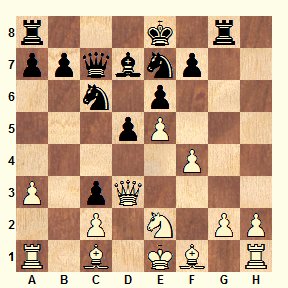
I have recently been showing some of my students some positions that come from very different openings, and am encouraging them to try out different systems. We've discussed various typical pawn structures, and central formations with typical plans surrounding them as well as natural development. The point is to play and study different openings so as to see and work through different sorts of positions.

The students I'm talking about have graduated from 1.e4 e5 systems and are looking at some Sicilian structures and some semi open games. Here are some typical positions to consider:


These are all typical opening positions that most experienced players will know of, but to kids, these positions are new and interesting. They have to consider strengths and weaknesses in the positions that they would not have considered during their play and study of 1.e4 e5 openings.

However, a question that arises to me is whether it is more important to play and study a diverse series of openings, or whether it is more important to deeply study a few openings. From a repertoire point of view, top players have tried both methods successfully, but for lesser players it is usually easier to play or learn a small repertoire which may expand over time. For kids, it is surely important to get them to examine as many types of position as possible, but at what stage should we be directing them to deeply study a repertoire?

Of course, getting the kids to work on their tactical, technical and positional understanding is vitally important, but opening choices are a fundamental question for all of us.

So I put the question to all readers of this blog: do you think opening diversification of specific opening knowledge is more important for an improving young player? And when, or if, does it change from one to one to the other?


Wednesday, August 8, 2012

Local Chess News

I haven't played at my local club for a few weeks and I feel a bit out of the loop as to what has been happening around Melbourne in chess terms. So it's time to have a look! The best place for general news is the forums Chesschat and Ozchess which both act as places where clubs can publicise and report on their events. Of course, most of the clubs and organisations have their own websites, but the forums have all conveniently blocked in one place. As an aside, I have to admit that I used to spend far too much time looking at these sites which can become addictive, but I've overcome it and hardly go to the forums at all.

MCC. This is my chess club, and there is currently a couple of interesting events happening (actually, the reason I thought about local news was a call to arms yesterday for people wanting to learn to operate DGT boards at our club, which I put my hand up to). The regular Monday night FIDE rated event is the Malitis Memorial, a seven round swiss tournement. Time flies, because this event has just crossed the half way mark and is being led by Gary Lycett on a perfect 4/4. However he will have a tough game against Sylvester Urban in the next round. Sylvester is half a point behind along with David Beaumont, Richard Voon and David Lacey (who again is having a big tournament). Top seed is Ari Dale who is a further half point back along with 4 other players. There is good coverage of this event on Kerry Stead's blog.

But perhaps the biggest event is the play off match for the Club Championship between IM Guy West and FM Dusan Stojic. These 2 dominated the MCC Championship earlier this year scoring 8/9. It is a 4 game match that has already started with a draw. The next game is tomorrow night and there will be games on the following 2 Wednesdays. I might have to make an effort to get along to one of these sessions, and I encourage anyone else to do so, both to support these 2 great players, and to learn from the first hand experience of watching and kibitzing.

Other clubs. While all the clubs in Melbourne seem active, there are some events that really stick out in my mind. Box Hill Chess Club are holding a 15 minute tournament this Sunday to raise funds for some talented juniors who are going to the Youth Olympiad. The tournament has attracted a number of strong players including GM Darryl Johansen and much corporate sponsorship, including from clubs and coaching organisations. Anyway, the tournament will be rated in FIDE's rapid rating list and all proceeds go to the players, so great work by Box Hill Chess Club! (ps, I like the new look website as well).

A couple of weekend tournaments are coming up, with Hobson's Bay Chess Club hosting the 'Best in the West' in Altona. This tournament seems to be getting bigger each year, and with Sydney's FM Greg Canfell a starter, the big names from Melbourne are likely to show up. In fact FM's Stojic and Dragicevic have already entered. These 2 young FM's are part of the success story behind Noble Park Chess Club, a club I have a great fondness for as I was a member around the time of it's inception. I remember the hard work of Mehmedalija Dizdarevic and Domagoj Dragicevic in creating a venue for 'serious' chess events. Well, a few years have passed and Noble Park Chess Club are holding their first weekend event in September and I intend to show my support to this great club by playing (and no doubt passing a few rating points on to their talented juniors!).

This is just the tip of the iceberg. I can honestly say that chess in Melbourne is flourishing and it is an exciting time to be involved in the game.

- - - - - - - - - - - - - - - - - - - - - - - - - - - - - - - - - - - - - - - - - - - - - - - - - - - - - - - - - - - - - - - - -
Yesterday's answers:

 1.Rd8+! [a typical distraction] 1..Nf8 [1..Rxd8 loses the queen] 2.Qxc5 Rxc5 3.Rxb8 winning a rook
 1.Qf8 [1.Qd8 leads to the same thing] 1..Ng8 2.Qxg8+! [a typical sacrifice removing the defender] 2..Kxg8 3.Rd8#
 1..Qe5! [threatening mate on b2 and e1, and the queen cannot be taken as then Rd1 would be mate]
1.Qxd8+! Nxd8 [1..Kh7 2.Qh8#] 2.Re8+ Kh7 3.Rh8# This mate with a bishop on the long diagonal is important to understand and adds another theme to the back rank mate

Tuesday, August 7, 2012

Back Rank

Teaching by repetition is a great way to work with kids. Find a theme, explain the issue, and then start with some easy examples and it is quite surprising just how advanced kids can get in a short space of time. Of course, to ensure maximum retention the subject can be repeated in further sessions, or homework can be given out and the answers worked through (otherwise it can be a case of in one ear and out the other). This week at some of the Primary Schools I am working at with Chesskids, I am talking about the back rank. The classes have kids of mixed ability so some definitions are needed, and then some very basic examples of checkmates on the back rank. However, once the pattern has been established all the kids are looking for a check on the back rank, and even assessing moves to see whether they are safe or not.

Without knowing it, the kids are introduced to concepts such as exploiting a battery on a file, distraction, intermediate checks, sacrificing for mate (surprisingly difficult for a lot of kids to give up material) and guarding possible escape squares for the enemy king. Here is the homework I'm giving out this week, all taken from recent examples.

 White to play and win
 White to play and win
 Black to play and win
 White to play and win


Answers in the next post :)

Friday, August 3, 2012

No chance for a breather

Following chess tournaments is now an ongoing experience. There is no shortage of events and as soon as one finishes another starts. The super GM event in Biel finished with Wang Hao taking first prize thanks to the 3 points for a win, soccer style scoring system. Under the more traditional 1 point for a win the winner would have been World number 1 Magnus Carlsen. But Magnus can be content with his performance, and the fact that his rating has moved closer to Kasparov's peak of 2851, and further from his rivals.

Rather than taking a breath and working out when the next big event will take place, there is no break as the Russian Championship starts today. Both the men's and women's sections boast excellent fields and National Championships often bring interesting results as the players know each other well. It seems to be a time for national championships with the British about to conclude and the Ukrainian entering the second half. These Championships are run on different levels, with the British being a medium sized swiss and the Ukrainian being an elite round robin.

The British has one round to go and is being led by GM Stephen Gordon who is half a point ahead of ratings favourite GM Gawain Jones, who is himself half a point clear of GM David Howell. But for me the swiss system event is all about players getting a chance to move up and in the British Marcus Osborne has taken his chance. I can't say I know him, but the 2245 rated player has scored 6.5 against a field that includes 3 GM's (and he has to face another in the final round!) and 2 IM's. His performance rating after the first 10 rounds is a whopping 2433 so a big congratulations to him.

Another interesting event that has just started is the World Junior Championship in Turkey. The tournament has a rich history dating back to 1951 when Yugoslav Boris Ivkov took the title. Ivkov went on to become a World Championship Candidate and other famous winners of the World Junior include Spassky, Karpov, Kasparov, Anand, Miles and Aronian. The current event has over 10 GM's, 4 of which are over 2600. again, you'll have to excuse my national pride as I cheer on the Australians (Andrew Brown and Fedja Zulfic, but sadly no players in the girls event) and English (Zhou Yang-Fan, Callum KilPatrick, William Jones, Ravi Haria, Henryk Stepanyan are all in the boys section while the girls section has Lateefah Messam-Sparks and Anna York-Andersen). The tournament started yesterday and hopefully we'll get some first hand experiences. Already in the first round, one of the Australians performed well above his rating. Fedja Zulfic (2135) scored a draw with IM Bajarani (2446) of Azerbaijan. Fedja found a nice resource in his endgame.

Loading embedded chess game...

Tuesday, July 31, 2012

A great.....and not so great week

I wonder what the news headline of this week will turn out to be?

Fantastic finale in Biel?


National Championships of Ukraine and Britain decided!


French players banned for cheating.


9 year old beats Grandmaster!

Of course, we would love for the tournaments to have dramatic finales and National Championships usually do have moments of interest as the players tend to know each other and their playing styles very well. The Ukrainian Championship is a strong (2724-2584) 12 player round robin with Ruslan Ponomariov the highest rated player. It has just started while the British Championship is drawing to a close with Jones and Gordon leading the way while Howell leads the chasing pack. The Biel super-GM event is also drawing to a dramatic conclusion with rating favourites Carlsen and Nakamura having to come from behind Giri and Wang Hao.

The big cheating scandal from the 2010 Olympiad concerning French players has finally been resolved with bans being handed out for all 3 Grandmasters. Thankfully, chess is not riddled with cheating scandals but in some ways that makes each one seem worse. When a cyclist is suspended for using a banned substance, I tend to think, 'here we go again, another one caught....I wonder how many others don't get caught'. But with chess, it's more like, 'oh my God, how did they do that, and why?' Actually, now that I think about it, I wonder how much cheating does go unnoticed at chess events? As an amateur enthusiast, I would hope very little.

As a coach of mainly young players, the most impressive headline to me would be the last one. I am constantly being amazed by the talents of young players. Here in Melbourne this past Sunday we ran a 7 round 15 minute per player tournament. In the under 10 section, second place was taken by a 4 year old! I saw the headline in the excellent Chicago Chess Blog of Bill Brock. I've been reading this blog for a while now, and find it really enjoyable reading, with excellent local coverage from the Chicago area. A 9 year old beating a Grandmaster is an incredible feat, though the record for the youngest player to beat a Grandmaster in a regular tournament game goes to a player already mentioned in this article, David Howell. Howell was only 8 when he beat GM John Nunn....unbelievable! And another previously mentioned player in this piece, Ruslan Ponomariov was the youngest to hold a World Championship at 18 (though some would dispute the legitimacy of this title).


Loading embedded chess game...
Monday, July 30, 2012

Rubinstein, Endgame Mentor

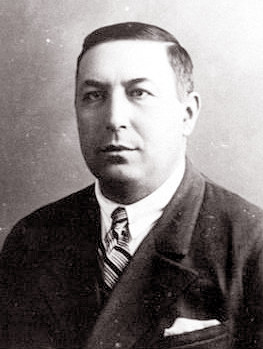
Akiba Rubinstein was one of the greats of the game of chess. For a period around 1908-1915 he certainly challenged as the very best player in the World along with Lasker and Capablanca. Rubinstein is also seen as one of the greats of the endgame and there is often a comparison made between him and Capablanca (I'm not sure why Lasker wasn't included as he was also a great endgame player). Personally, I don't think there is a better player to study as an endgame mentor than Rubinstein. He was able to convert advantages in the endgame, but he was also able to set his opponents difficult problems when he was in a worse position which is just as useful a skill.
Rubinstein (from www.chessgames.com)

I recently bought Donaldson and Minev's book "The Life and Games of Akiva Rubinstein volume 1" which is more games than life, but still has some interesting biographical and anecdotal details. The book is ordered chronologically and is peppered with crosstables and photgraphs. Of course, the games themselves are important and many have notes to them, often from contemporary sources.

It appears that 1907 was a breakthrough year for Rubinstein with big victories at Ostend and then at Carlsbad. His very first game at Ostend saw the young and relatively inexperienced Rubinstein playing gainst the grand old master, Joseph Blackburne. Rubinstein played solidly, but played a poor move allowing Blackburne to take the game into a very good king and pawn endgame. At that point, Rubinstein is probably lost, but he starts to set Blackburne difficult tasks and finally comes away with a draw.

Rubinstein as black played 42..Qg5 but keeping queens on would have been better. After 43.Qxg5 hxg5 44.Kd2, Rubinstein starts to step up.

Black is worse, but it is still important to find the best move. 44..g6! 45.h6? 45.hxg6 was better and probably winning, but both sides would promote at the same time which probably put Blackburne off. He also may have miscalculated the resulting position as white would have 2 connected passed pawns in the queen ending.
Now the obvious capture 45..Kxh6 fails to 46.g4 so Rubinstein here played 45..g4! and it is no longer easy to win this position for white. In fact the best he can hope for is a queen ending with 2v1 pawns though they would all be passed and black's single pawn may be the most advanced. Not at all easy to win.


Loading embedded chess game...

Sunday, July 29, 2012

Chess Disappointments

Just like in any activity, chess can be both exhilarating and uplifting, while also sometimes disappointing. Let me give you some typical examples of disappointment, to my mind.

1. Players withdrawing from tournaments. This is very annoying for organisers, other competitors, and fans (not to mention sponsors). Players withdrawing from swiss system events can be very disruptive, sometimes leaving a bye in the field and sometimes creating some odd pairings. Especially annoying is a player who withdraws from a swiss event after a few rounds having spoiled the chances of some players, but then not having to play their competition. In a round robin, things can be even more disruptive. If the tournament is being held primarily for norm purposes, a withdrawal can, and probably will, eliminate the chances of the tournament producing a norm.

Recently at the top level the high profile withdrawal of Alexander Morozevich from the Biel tournament occurred. Morozevich left the tournament for health reasons, and that is always a worry for chess fans. The loss of Morozevich from the chess scene 2 years ago was a big disappointment for his fans, and I amongst many hoped for his recovery and return to the international chess elite. Now we can only hope he is ok to keep playing, even if he has to play less.

2. Chess politics. I don't usually get involved in politics on this blog, but the resolution offered by Turkish Chess President to penalise chess federations who took legal action against FIDE seems ludicrous. Ali Nihat Yazici has stated that the federations of France, US, England, Germany, Georgia, Ukraine and Switzerland

"must be given suspension from FIDE including players, arbiters, trainers, ratings and organising FIDE rated events, till damage is covered by those federations". To be honest, I couldn't believe that arbiters were being refused from certain countries (ie. those countries mentioned above) to act at the Olympiad. Then again, we are talking about a federation that can take action against one of its own Grandmasters in what appears a somewhat arbitrary way.

I think I'll stay away from chess politics. The more I think about it, the more disappointed I get.

3. Chess play. We are at the end of week one of the British Championship, and my only disappointments is that my friends aren't doing better. After his great start, Don Mason has lost 3 in a row, while Mike Surtees started indifferently, but picked up toward the end of the week. The tournament itself has now seen the cream starting to rise to the top with GM's Jones, Howell and Gordon leading a pack of titled players. The live coverage is excellent and the games that I've seen (not as many as I'd like, but I'll get through more) have been exciting. It is a bit disappointing that our super GM's Adams, Short and McShane aren't playing as all have been in decent form this year and are in the 2700 club. It's also a bit disappointing that there are no aussies in the field, though WIM Sue Maroroa from New Zealand is playing, scoring just below half points in the first week including a draw against strong FM Peter Poobalasingam.

Congratulations to all the prize winners from the first week, including age group champions.

A few disappointments have occurred to me, though. First, the dour World Championship match was not a spectacle for fans who were disappointed by the tactics of both players. Since the match, Anand has stated that matches are different to tournaments and he always knew the match was going to be tough. To the untrained eye, at times it seemed as if neither player was really trying to win, but preferred to not lose.

Another disappointment came today for me when I turned up to play a match for my club to find that someone had taken my place. There must have been some mix up, as I arrived a little late to find that the match had started without me. I had expected to find my clock running, but not someone sitting in my place!


With so much doom and gloom in my post, I want to finish in inspirational mood. Probably, my favourite game of all time is the following queen sacrifice game played by Paul Keres against Max Euwe in 1939. If you haven't seen the game, you will be in for a treat, and if you have, then please enjoy it again. I find it no bad thing to go back to the things that have inspired and exhilarated us in the past!


Loading embedded chess game...