Everyone has favourite systems, and we all try to defend openings that get a bashing. Even some pretty decent openings come in for a bashing every now and again. Take the King's Indian Defence, or the Sicilian Dragon. Then again, if you're going to play a fighting opening, then you will also have to fight to defend your opening's reputation.
The system that I have a soft spot for is the Hennig Schara Gambit. When I was a young player, Kasparov was not yet World Champion and was playing the Tarrasch Variation of the Queen's Gambit (among other fighting systems). It was back then in the mid 80's that I first really became aware of the Tarrasch and the amazing piece play that black can generate at the expense of pawn weaknesses. Certainly at club level a player who is good with active pieces should consider openings such as the Tarrasch which offer excellent play for the expense of a pawn.
Black immediately challenges the centre, and after 4.cxd5 exd5 we will have a position where white can give black an isolated queen's pawn. In fact, positions with an isolated queen's pawn for black were those championed by Kasparov on his way to the World Championship in 1984. He successfully used the defence against Beliavsky, Korchnoi and Smyslov, and even used it against Karpov in their first match in 1984. Here is (essentially) the deciding game in the 1983 Candidates Final. It left Kasparov 8-4 ahead against Smyslov, needing only a draw to progress which he duly scored in the next game.
It wasn't until the 1990's that I became aware of an interesting sideline of the Tarrasch, the Hennig Schara Gambit. Instead of accepting an isolated queen's pawn, black sacrifices a pawn again for great piece play. I didn't really take it too seriously at first as I can't really say I am that inspired by gambit openings generally. I'm more the sort of player who grabs poisoned pawns and tries to hold on to them! However, I was fully converted by 2 articles written by Irish correspondence GM Tim Harding. Harding has been writing a monthly column at chesscafe.com since the mid 1990's and many of his early columns were about odd openings that tend to crop up more often in correspondence play that over the board. His articles on the Hennig Schara (no 1, and no 2)were beautifully written and were good enough to make me believe in the opening. I've used it on a number of occasions, and have every intention of trying it out some more. As pawn sacrifices go, it is very enterprising, and there is no easy way for white to get anything out of the opening. The mainline goes 1.d4 d5 2.c4 e6 3.Nc3 c5 4.cxd5 cxd4!? [The Gambit] 5.Qxd4 Nc6 [While white's queen grabs a central pawn, black is able to develop quickly and aggressively] 6.Qd1 exd5 7.Qxd5 [Now white will be a pawn up out of the opening, but with the centre wide open it's anybodys game] 7..Bd7 [Black can play a pawn down in a queenless position as well which is also interesting. 7..Be6!?] 8.Nf3 Nf6 9.Qd1
So here's the main tabiya. After 9..Bc5 black has excellent minor piece deployment, and to add a further random feature to the game, black most often castles queen side to whites king side castling. My own favourite game, a win against ex Australian Champion Doug Hamilton was in this opening, but rather than singing my own praises, take a look at this recent game where a 2600ish GM gets smashed by a 2300ish player. Enjoy :D
Showing posts with label smylov. Show all posts
Friday, July 19, 2013
Hennig Schara Gambit
Labels:
chess cafe,
hennig schara,
kasparov,
microbase,
smylov,
tarrasch,
tim harding
Sunday, October 7, 2012
Endgame Epiphany
There comes a time in every players chess development when you suddenly realise that you don't know enough about the endgame. Most players fall into the trap of working on opening variations, and getting good positions, only to go wrong sometime later in the game. It is usually a combination of a painful result such as an easy win that turned into a loss, some jovial ribbing from our opponent who can't believe his luck, and one of the chess club's elder statesman shaking his head in an "I told you so" sort of way that finally leads us to the fact that we need to work on this part of our game. Remember the old adage, "the hardest part of chess is winning a won game"? That's why we have to work on our endgames.
Of course, the problem with studying endgames is that it is very theoretical and starts from the wrong end of the game! This makes it difficult to apply to our games. As an example, my first book on the endgame was "Practical Chess Endings" by Paul Keres. I was attracted by the title, and knew that Keres was one of the greatest players in chess history. However, I just couldn't get into the book which was laid out in a text book type fashion. Funnily enough, since working on the endgame, I have looked at this book again and realised how good it is. It is an excellent one book compendium taking a player to a competent level of endgame play, but it is not didactic. In fact, I would go as far to say that unless you had some previous knowledge of endgames, the book can be downright boring! And of course, it is not the only endgame book like this.
To learn how to play endgames, most players need to learn theory after general principles. To apply endgame knowledge we must know things such as using a king, restricting our opponent's king, creating passed pawns, defending material, how pieces work together and against other pieces, strong and weak pawns, space and how to create plans. The best set of general principles I've seen are listed on Exeter Chess Club's website. These are pearls of wisdom taken from a number of sources and conveniently placed together.
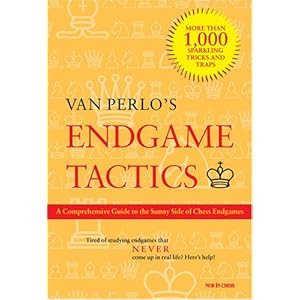
Another important aspect in teaching endgames is inspiring players. If the subject matter comes across as boring, then it will be harder to focus, and may even prevent a player from trying (that's what Keres book did for me). Somehow endgames need to be made interesting, and some books have certainly achieved this. The book that first made an impression on me was Chernev's "Capablanca's Best Chess Endings". In this book, Chernev not only explained the endgames, but made it a personal tribute to Capablanca, who he obviously admired. There is a similarly inspirational book about another world champion, "Vassily Smyslov, Endgame Virtuoso". These books which single out a player and take the way they play a certain aspect of the game are great introductions. They are relatively lightweight giving us an introduction into endgames which would then make a textbook such as Keres' more accessible. Another great book to introduce oneself to endgames is van Perlo's award winning "Endgame Tactics".
Once inspiration has sunk in, players can go about improving their knowledge of specific endgames. Again, I think that books that go from a-z, that is king and pawn versus king through pawn endgames onto queen endgames, rook endgames minor pieces and so forth are not the books to go for. These sorts of books are in my opinion more like reference works. They have their place on a bookshelf, so they can be referred to after an endgame has been played. Actually, I prefer books which jump around a bit and "Silman's Complete Endgame Course" is an excellent example of this.
As you get more and more into endgames, you start to look at more and more types and more theoretical endgames. You also start to see in your games plans early on which have reference to possible endgames which might arise. I have been using 2 resources regularly for quite a while now, that analyse contemporary endgames. In the daily chess newspaper, "Chess Today" GM annotators (especially Alexander Baburin) look at practical endgames regularly. Here the emphasis is most definitely practical as the examples come from real, recent games. However, there is often a theme put to an article (eg recent rook endgames, minor piece endgames from the Olympiad etc) and often the examples are put into their theoretical context. The other great resource is GM Karsten Muller's articles on chess cafe, and chessbase. Again, these are varied and based on practical examples, but placed into a theoretical setting. So you get the best of both worlds, some interesting examples explained in general terms with more concrete theory to back this up. In fact, it would be well worth looking through the archives of chess cafe and going through Muller's old articles. He has written so many that compiled they would become an excellent book on chess endgames.
So, once the epiphany has come about and you realise you have to do something about the endgame, get inspired about the work you are about to undertake. Believe me, once you get into endgames, they are great fun to work on. But you have to get in to them in the first place. So start with a book like van Peerlo's, then move on to something like Silman's, and all the while check through the stuff on chess cafe, and subscribe to a resource like chess today. And best of all, get someone to work with, because it's easier to have a study companion or to work in a group than it is to plough through these on your own....at least to start with. I'll be adding some endgame material on this blog in the future (basically, rehashing my old MCC Endgame Group), which will hopefully be inspirational :)
Labels:
Capablanca,
Chess,
chess cafe,
chess today,
chessbase,
Endgames,
exeter chess club,
Keres,
muller,
silman,
smylov,
van perlo
Subscribe to:
Posts (Atom)