Sunday, March 18, 2012

Ballarat the Final Day

Obviously I can't speak for everyone, but I'm sure that I wasn't the only person playing in the tournament who was eager to reach the finish line. I woke up on Monday morning feeling a bit tired, but ok. By the time I had arrived at home in Melbourne later that day, I had a thumping headache and felt thoroughly exhausted. I ran out of steam on the final day. I think I had reached the limits of my endurance about half way through the 6th round.

Round 6 started with 3 leaders, but finished with 2 leaders. The top board game between Alistair Cameron and Patrick Scharrer finished in a win for the Italian FM. He was joined on 5.5 by Domagoj Dragicevic who beat IM Stephen Solomon in the 6th round. Both the leaders had played about equally tough fields (actually, not overly tough), both had given up just 1 draw to talented juniors, (Dragicevic to Cameron in round 5, Scharrer to Justin Tan in round 4) and both had played and beaten just one player higher rated than them, coincidentally an IM for both, during the tournament (Dragicevic beat Solomon in round 6, Scharrer beat Morris in round 5). They had both efficiently taken care of the other players they had faced. A big group of players started half a point behind the leaders, but only 2 could win their games, Chris Wallis and Brodie McClymont. So going into the last round, the major honours would be fought out by these 4 players. I played against another talented young player, Yi Liu and seemed to get a promising position. However, I couldn't find a good plan (perhaps it would be more accurate to say that I didn't really find any plan!) and the game drifted to a draw. There was one point of interest about my game, from my point of view. I played the first few moves pretty quickly, but suspected that my opponent might have done some preparation for my favourite Noteboom. So I avoided this and went for a more conventional Semi Slav, taking the risk of playing into my opponent's repertoire. However, it seemed that Yi was just as lost as me, and after about 10 moves we were just playing chess.

Round 7 was horrible for me. I had to play an opponent who I find particularly difficult, FM Dusan Stojic, and after maybe half an hour I began to develop a headache. I offered a draw early on, following an exchange of queens, but I'm guessing Dusan saw this as a sign of weakness and played on. He was right, and I didn't really put up too much resistance, dropping a pawn, and then another until I finally dropped a whole rook. A shame really, as it was a bad way to finish what was otherwise a pretty good tournament for me. I'm not 100% sure, but I think I'll be picking up about 10 rating points for the tournament mainly thanks to my win against Solomon.

A quick draw ont he top board guaranteed a share of first prize to Dragicevic and Scharrer. They were joined by McClymont who beat Chris Wallis in the final round. Guy West was the highest placed IM, in joint 4th along with FM Bobby Cheng, FM Dusan Stojic and Justin Tan. As Guy is the only one of these top 7 players aged over 30, it perhaps demonstrates that weekend chess tournaments are the realm of the young.

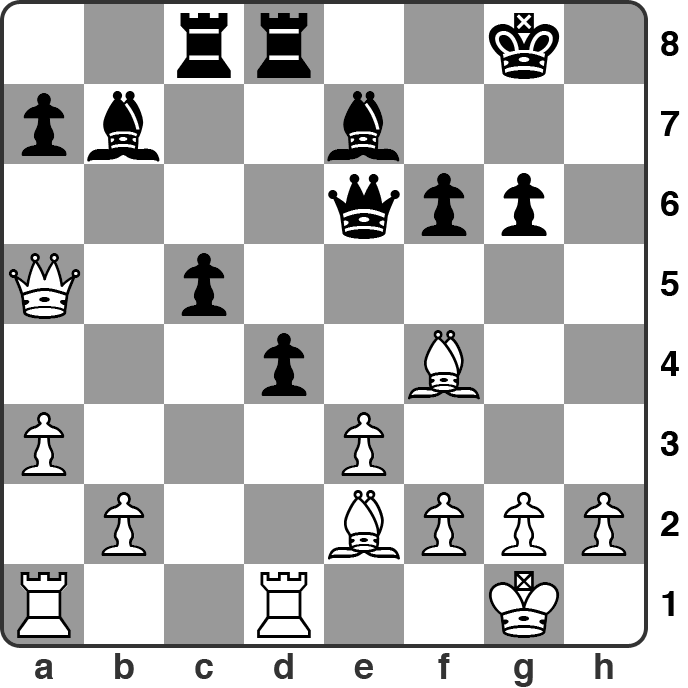
Here's one of the nicest wins from the event, by IM Guy West in round 1.


I must say, I enjoyed the tournament, but if I play next year (and I will almost certainly play next year) I will definitely consider taking a bye on Saturday night turning the tournament into a 2 rounds per day event.

Friday, March 16, 2012

Ballarat: The Longest Day

The second day of the long weekend tournament at Ballarat is a battle of endurance as much as a battle over the chess board. The day starts with round 3 at 9.30am, the next game is at 2,30pm and the final round starts at 7.30pm. With a time control of 90 minutes plus 30 seconds increment from move one, the games are averagely lasting 3-4 hours. So this means somewhere between 10 hours or more of play is pretty standard. Needless to say, the standard of play can become pretty patchy later in the day.

The first round of the day, the third of the tournament, is always a bit odd as the accelerated pairings are switched off. This means a number of huge rating differences can occur. For example, visiting Italian FM Patrick Scharrer, 2288, found himself playing black on board 4 against young Jason Chew rated 1394. This sort of discrepancy happened throughout the draw. On 1.5 there was Cameron Yung (1351)-Doug Hamilton (2040), on 1 point there was an average 700 rating point difference between players, but perhaps the biggest difference in ratings between opponent's was between those yet to score, where Angelo Tsagarakis (1760) played Daniel Poberezovky (263). So for most players, the morning game is a run through the motions. However, I was not quite so lucky. My reward for giant killing in the previous round was to play on board 1 against FM Chris Wallis. What was worse was that the last time we played I managed to win against Chris, so he was out for revenge. Chris showed his class at Queenstown, New Zealand, earlier this year where he scored 2.5/6 against the GM's he played including an epic win against Gawain Jones (2653). We repeated the same line as in our last game (my first mistake) but this time Chris was ready and he made no mistakes in following his attack. As bad as it feels to lose, I was mollified by the fact that my opponent is unbelievably strong and a really nice guy!

Round 4 was an interesting affair as many of the top players were working their way back up after earlier shocks. Or at least they were trying to! While Chris Wallis was working hard against GM's in Queenstown, the Australian Junior championship was being held in Melbourne, an unfortunate clash. With a number of Australia's top junior's playing in Queenstown I had heard it said that the Australian Junior Champion was therefore not Australia's top junior player, and the championship was devalued. However, the winner of the 2012 Australian Junior Championship, South Australian Alistair Cameron was proving in Ballarat that he was a worthy Champion. In the fourth round he added to IM George Xie's woes by defeating the Australian number 3! In this round I had one of those moments in chess where something happens that makes your stomach twist. My opponent played one of those tricky lines that I didn't know anything about, the Belgrade Gambit in the Four Knights Opening. So I played some rubbish that wasn't particularly critical, and luckily played a bit better than my opponent later in the game.

I don't really want to talk too much about the final round of the day. I admire anyone who can get through the third round in one day without making mistakes that are too horrible. As an example, my final game with Tony Davis was a very tentative affair where neither of us seemed to have any positive ideas. Tony made one more aimless move than me and allowed me a central break which looked good, but I still wasn't convinced by my position. I came up with a convoluted plan to rearrange my pieces, then changed it, then changed it back again, made a move I immediately regretted, and then realised it was actually pretty good! I'm not sure what was going through Tony's mind, but he seemed equally adrift, and I was lucky enough to finish stronger and take the point!

After the second day was eventually finished (about 12.30am was when the last game finished!) no one was on maximum points. I overheard someone saying that no one had ever scored 7/7 at Ballarat to win the event. I don't know if this is true, or if it was just another player disgruntled with the acceleration policy! Three players shared first place on 4.5/5: Domogoj Dragicevic, Alistair Cameron and Patrick Scharrer. However, there were over 25 players within a point of these 3 players all waiting to pounce.


Wednesday, March 14, 2012

Ballarat Round 2 Carnage

The second round of the Ballarat Weekend tournament saw the top seeds tested a bit harder with only about 200 rating points difference between most opponents. As most players hadn't worked themselves fully into gear yet, and this being the second round of a long day, some surprises were to be expected. However, I'm not sure the results that actually occurred would have been predicted by many. None of the top 5 seeded players could win and there were upsets throughout the draw. Probably the foremost result was young Karl Zelesco drawing on the top board with IM George Xie. Karl's progress over the previous couple of years has been staggering and this is another indication that he still has more to give. On board 2 I upset IM Stephen Solomon who frittered away a promising position. Funnily enough, I won this game in Solomon's own style. On board 3 Malcolm Pyke (who I seemed to be sat next to in every round of the tournament) won against FM Bobby Cheng. On board 4 John Nemeth held IM James Morris to a draw, while on board 5 Jason Tang beat IM Guy West!

Further down, Austarlian Junior Champion Alistair Cameron beat IM Leonid Sandler, veteren Doug Hamilton held Jesse Jager to a draw, Anthony Hain and Marcus Ogden held much higher rated opposition to draws, as did promising juniors, Dmitry Lee, Cameron Yung, Finley Dale, and Tristan Krstevski. Other winners against higher rated opposition were Jason Chew, Alana Chew Lee, Marko Grabovac and Gary Lin. Just like in the first round, much of the damage was done by juniors who are either unknown or under rated.

The tournament has had a number of games published which can be found on tornelo and I believe that more games are to be uploaded. There were carbon copies of games in the "pit" area of the hall. Basically Ballarat has a lowered floor area where the top boards play. I think there is room for about 10 games in the pit and these will be the games covered. The tournament was also reported on chesschat which is where the pairings were published. Information about the tournament was published on Ballarat Chess Club's own site.

Top seed George Xie was visibly disappointed after his game with Karl Zelesco, but maybe he should have been happy to come away with half a point.

Zelesco as white had a choice of going for the throat with 30.Qxf7+ or going for the endgame with 30.Qxc6. Karl chose the more attractive looking 30.Qxf7+, but George managed to grab a perpetual. If Karl would have captured on the queen, he would have found himself in a very favourable endgame. 30.Qxc6 bxc6 31.Re8+ Rxe8 32.Rxe8 Kh7 33.Ke2 Rxc2 34.Kd3

Black is temporarily a pawn up, but he is playing with 2 pieces less as his king and knight are out of the game. his queen side pawns are all weak and will fall, so this position would have been very good for Karl as white.


Tuesday, March 13, 2012

Ballarat Weekend Chess Tournament 1

The traditional weekend event over the 'long' Labour Day weekend holiday in Ballarat is undoubtedly the premier weekend event in the Victorian Calendar. This was confirmed to an even greater extent by this year's tournament which included 5 International Masters, 5 FIDE Masters and a total of 29 players rated over 2000 in a big field of about 130. With only 7 rounds a field of this size prompted the organisers and arbiters to use accelerated pairings for the first 2 rounds. Now personally, I'm not a big fan of acceleration as it just seems to delay the mismatches. If the reason for acceleration is to minimise mismatched pairings, then maybe it is time for the Ballarat organisers to split the tournament in 2 with perhaps an open section and an under 1600 section. If the acceleration is to ensure an outright winner, then I think the logic is somewhat flawed as it seems to me that the later rounds of big swiss events produce plenty of draws to minimise those on maximum points.

Saying that, the draw did create plenty of interest and I can't complain as I ended up playing a pretty decent field with no easy games. My own rationale for playing weekend tournaments (or any tournaments, for that matter) is to play as strong a field as possible to test my own playing level. My rationale is certainly not anything to do with winning tournaments, though of course, I try my best to win every game I play. Saying that, it was a bit of a shock to win my first game, and then to find myself in the second half of the accelerated top pairings. Before the tournament started I was aching for a top player or 2 to take a crack at, but thought this would come toward the end of the event if I played well. I think it might have been a bit of a shock for the top players as well, as the second round was utter carnage for the top players.

So, in round 1 the top 64 players were cut off and paired against each other. There was still about a 400-500 rating point difference between opponents and this led to hardly any surprises, with all top seeds winning except John Dowling who drew with Bas van Riel. The lower half of the draw had Anthony Hain (1615) at the top on board 33, and went down to board 65 where the higher rated player was Victorian Junior Thomas Ebeyen (1034). This bottom half had a number of new players and juniors, many of whom were unknown quantities, or definitely under rated so more surprises would be expected here. Juniors Liam Harrison of Mildura, and Melbourne based Max Phillips both drew with much higher rated opposition, while there were against the odds wins for James Brennan and Tanya Krstevski. To be honest, though I've seen James and Tanya both play at the Melbourne Chess Club, and they are both grossly under rated so it was a bit tough on their opponents.

My first game was against Tom Lea, who I don't know but with a rating of over 1700 I knew it wouldn't be easy. The game opened as a Spanish and I chose the Worrall, mainly because I don't know enough about the main closed systems. I am working on these systems, but that wasn't much comfort at the board. Tom was determined to play the Marshall Gambit against me, and chose the same system against the Worrall. In his book on the Spanish, IM Andrew Greet considers this system as the critical response. I chose a particularly dodgy system and was rather lucky not to be punished.

White to move in this Worrall version of the Marshall Gambit. Greet says that it is too dangerous to take the pawn. Unfortunately, that is what I played and I soon found myself in a tough position, though things could have been worse. So I took the pawn, but had to give it back later and was lucky when Tom missed a tactic that won me a pawn. I was very happy to win this game, especially seeing that Tom then went on to win 3.5 out of the next 6 games including a win over higher rated M. Dizdarevic, and only losing to top seed IM George Xie and 2000+ player Dean Hogg.

The first round started a little later than the 1.45pm advertised time which gave those players playing longer games little time between rounds. I found the tournament schedule of 7 rounds in 3 days so brutal that I didn't analyse with my opponents at all after the games. I had time to relax a little, get something to eat, and help with the group of junior players that my company, Chess Kids, took to the tournament. I also did no preparation between rounds, and I know that many others couldn't find time for these usual tournament essentials.

When I got home after the event, I was physically exhausted, and I'm still tired the day after. I haven't looked too deeply at any of my games yet, but will over the next couple of weeks when I'll report more of the Ballarat Weekend Tournament.

Tuesday, March 6, 2012

MCC Championship Round 5

The 5th round of the MCC Championship brought us the match up we've been most looking forward to with both International Masters, Mirko Rujevic and Guy West playing each other. These 2 stalwarts of Melbourne chess (and Victorian and Australian chess) must have played each other dozens of times, and at the MCC their encounter usually plays a big part in determining the tournament winner. This time Guy won. Mirko didn't seem to play with his usual vigour and found himself in a late middlegame being squeezed for space. In the end Mirko lost on time in a position that was far from lost, but certainly difficult for him.

This is Mirko's first loss of the tournament, and usually that would mean that the 2 IM's had taken out everyone else and were meeting on board 1. However, Guy had drawn twice early in the tournament and his victory only enabled him to catch up with Mirko. Meanwhile, the board 1 game saw me playing black against FM Dusan Stojic. I didn't play too badly in this game, but in the end Dusan proved too strong outplaying me from a slightly better position. This leaves Dusan the sole leader of the tournament on a perfect 5/5, while I drop down to join the 2 IM's West and Rujevic on 4/5. We are joined by FM Chris Wallis who took advantage of David Beaumont's Benoni, Sylvester Urban who beat Ari Dale after Ari suicidally castled queen side in a Benoni, and Pano Skiotis who won the longest game of the night against Gary Lycett. The winner of this tournament is likely to come from this group of players, though Dragicevic and Voon on 3.5 could theoretically still challenge, and Karl Zelesco could join these 2 if he wins his postponed game against Michaille. I'm going to stick my neck out here and say that anyone on 3/5 or under will not win the tournament. However, a good run by anyone will see them finish in a high position.

There were some terrific underdog performances this round. Marcus Ogden held Malcolm Pyke to a draw, and Gary Bekker held Justin Penrose. Actually, I thought Brad Ashlock was going to hold Dragicevic, but Domogoj kept fighting and Brad made a heart breaking blunder in the endgame that cost him the game. The upset wins came from young Finlay Dale who beat Kevin Brown, and Paul Kovacevic who beat John Dowling.

The tournament is now taking a break for a week to avoid clashing with the Ballarat Weekend tournament. The next round will be on Monday 19th March and I'm finding it very difficult to predict who I'll play. Dusan has played me and Chris, and Guy probably won't float up again. Mirko and Pano are the wrong colours for Dusan so I have a feeling that the lowest rated player on 4/5, Sylvester Urban, may find himself floated up to play Dusan. Now personally I don't see this as being in the spirit of the swiss draw, but I would understand the logic of it. About the only thing I can predict is that I will be white, as I've just had 2 black's....probably!


Tuesday, February 28, 2012

MCC Championship Round 4

The playing conditions at the Melbourne Chess Club are wholly weather dependent. For most of the year, the temperate nature of Melbourne makes it a pleasant place to play. In the winter the heaters are sometimes needed, and in high summer it is dangerously hot. On the evening of the 4th round of the MCC Championship, a hot spell had just broken but it was incredibly humid. The playing rooms were pretty stuffy, though not as hot as I've known them. All in all it was mildly uncomfortable, and with tensions rising as the tournament progresses, one can only hope that we don't get too many more heat waves this year.

At the start of the 4th round there were still 5 players on 3/3. As the lowest rated player who hadn't floated down, I dropped out of the main group and played someone on 2.5. The top 2 pairings saw FM Stojic playing FM Wallis in a repeat of the 2010 Victorian Championship play off, while Beaumont played IM Rujevic. Both these games were still in progress when I left and I couldn't tell which way they were going to go, but in the end Stojic and Rujevic both won.

I joined them on 4/4 with a very nervous game against the giant killer of the tournament so far, Anthony Harris. I must admit I had some butterflies before the game. I wasn't sure how the game would go, and didn't really prepare. Once the game got under way, I went for a Noteboom which I know quite well. I was lucky because Anthony seemed to be a bit out of his depth in this tricky opening and I found myself 2 pawns to the good after about 15 moves and just needed to play carefully to convert the advantage.

So 3 players will be on maximum points going into round 5, but the pressure is mounting from behind. The first game from the top tables to finish was IM Guy West's victory against John Dowling. Guy seems to have gone with the flow the last 2 rounds and taken the game to his opponents. I'm not sure if his policy was to play a little safe in the first couple of rounds and wait for mistakes that never happened, but he is now certainly throwing pieces around and playing creative, tactical chess. On boards 5 and 6, there were interesting matches between established strong adult players and talented juniors. The adults scored half out of 2! Domogoj Dragicevic was looking to attack Karl Zelesco, but my brief glance at their game made me feel that he really didn't have enough to justify this. When I left he was a pawn down, but the game ended a draw. Malcolm Pyke seemed to have a decent position against Ari Dale, and I have no idea what happened to allow Ari to win this game. Unless I'm misreading this game badly, Malcolm could easily have been on 4/4  but let good positions slip 2 weeks in a row.

Outside of the small room there were 2 postponements and 2 forfeits amongst the games. Being a club tournament, allowing postponements (and byes up until round 7) lets more people participate who might not play if the event was strictly set on certain dates. So it was a bit disappointing to see forfeits, though of course, sometimes these are unavoidable. At the top end Pano Skiotis and Gary Lycett jumped up to 3/4 while at the other end, young Oscar Pearce scored his first win, so congratulations to him!


After the 5th round there will be a week break so as not to clash with the Ballarat Weekend event. So I guess it is quite important to try to get to this break in a good position which will happen to me whatever the result of my next game as I would have been more than happy with a 4/5 start. I think 4/4 is my best start to the Club Championship, and I know that whatever the draw throws up at me the next one will be tough. I'm guessing that I'll have another black, this time against Dusan Stojic who is also due white. The alternative is that I float down again, when I'd probably have to face Guy West but I don't think this will happen. Whoever I play, it will leave an amazing game on the other top board. If I play Dusan then the IM's should have to face off, with Mirko Rujevic white against Guy West. Otherwise, Dusan and Mirko might have to face off, but a great contest seems guaranteed!

Thursday, February 23, 2012

Practical Rook Endings

My game in the last round of the MCC Championship against Domogoj Dragicevic taught me a bit about a certain type of rook ending, and endings in general. I must admit that with just my 30 second increment left, when the following position was reached I was sure it would end a draw.
I had seen similar types of endgames with an extra pawn end a draw with a couple of techniques available for the defender. Black can let white's king approach its pawn and then start checking from behind it. Black can try to win a pawn on the king side, and then sacrifice his rook for white's a-pawn hopefully resulting in a drawn rook versus pawn ending.
However, in this position, black is at a big disadvantage that I didn't notice at first. Black's king is stuck on the back rank which ties black's rook tot he a-file permanently. As white I decided to play on and see what would happen. My plan was to push the king side pawns so that black's rook couldn't take them and then move my king to the queen side. As it was this wasn't necessary. 1.h3 Kh8 [Black waits passively, but there is little else to do] 2.h4 [Obviously white is struggling for a plan] 2..Kg8 3.g3 Kh8 4.Kf1
At this point I had a revelation. I had gained a little time to think, and it suddenly struck me that if black's rook tries to take my g3 pawn, then I could play Rc7 and after black's rook returns to the a-file, I can play a7 followed by Rc8 and a8=Q forcing black to part with his rook. So it was also about this time that I began to wonder whether I actually needed to move my king side pawns. Oh well, it gained me some time, and no damage was done!


Just to show how important details are here is an example of a drawn endgame.
Black's king is here able to hide from checks and escape up the board if necessary. The difference is that black will be able to take at least one pawn and get back to the a-file to prevent it promoting.


I have to admit, I was lucky to win this game. I didn't know the endgame in the original position was a win for white, but kept plugging away. On the positive side, I was able to work out a winning plan over the board in pretty short time. And the best thing is that I have a little more technique that will stick in my mind for games in the future.