Showing posts with label Rubinstein. Show all posts

Friday, July 6, 2018

Game of the Day 4

I have more than 1 book on Rubinstein, a player I'm fascinated with. Rubinstein learned the game relatively late in life compared to most great players at the age of 16. But already 10 years later he was beginning to establish himself as one the top players in the world. He was strong enough to be considered for a World Championship match against Lasker, but never got the chance to play because of the outbreak of the First World War.

Rubinstein's style was fairly universal, but he tended more toward the safe side of chess. He was a great innovator int he opening, a fantastic attacking player when he had the chance, great with the initiative, and solid in defence, but his true forte was the endgame, and especially rook endgames.

I have 3 books about Rubinstein and others that contain short parts about him. The most basic of the 3 biographies is "100 Selected games" by Hans Kmoch, a master strength contemporary of Rubinstein. The notes in this book are fairly simple to follow, and it provides a great introduction to Rubinstein. Much of this book is available to browse in google books.


The game I have chosen today is Spielmann-Rubinstein St Petersburg 1909. This tournament was a great triumph for Rubinstein who shared equal first with World Champion Lasker, and winning their individual encounter. Rubinstein also played a masterful pawn ending against Cohn in this tournament that everyone should know. Against Spielmann, Rubinstein came back from a bad position to win a rook endgame that seemed impossible to win.


Rubinstein was Black in this game, but if his opponent Rudolf Spielmann, a famed attacking player, could have found the best continuation here, we would have been talking about him rather than Rubinstein. See what you can find, and then check out the full game at the end of the article.

The main brilliance of this game starts from the following position:


White has more pawn islands than Black which makes Black's position preferable, but if White can swap his a and d-pawns for Black's d-pawn, the endgame with 3 vs 2 on the king side is almost certainly drawn. Rubinstein was aware of this and his play was directed against this. Have a look at the game with notes by Kmoch, and I will post a more detailed analysis of this endgame, which is annotated in Kasparov's "My Great Predecessors" volume 1 among others.

Anyway, enjoy the game!

Loading embedded chess game...

Monday, July 30, 2012

Rubinstein, Endgame Mentor

Akiba Rubinstein was one of the greats of the game of chess. For a period around 1908-1915 he certainly challenged as the very best player in the World along with Lasker and Capablanca. Rubinstein is also seen as one of the greats of the endgame and there is often a comparison made between him and Capablanca (I'm not sure why Lasker wasn't included as he was also a great endgame player). Personally, I don't think there is a better player to study as an endgame mentor than Rubinstein. He was able to convert advantages in the endgame, but he was also able to set his opponents difficult problems when he was in a worse position which is just as useful a skill.
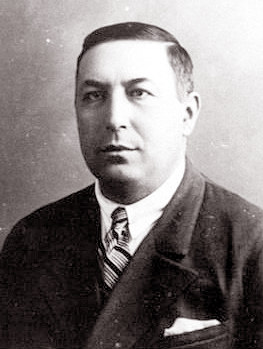
Rubinstein (from www.chessgames.com)

I recently bought Donaldson and Minev's book "The Life and Games of Akiva Rubinstein volume 1" which is more games than life, but still has some interesting biographical and anecdotal details. The book is ordered chronologically and is peppered with crosstables and photgraphs. Of course, the games themselves are important and many have notes to them, often from contemporary sources.

It appears that 1907 was a breakthrough year for Rubinstein with big victories at Ostend and then at Carlsbad. His very first game at Ostend saw the young and relatively inexperienced Rubinstein playing gainst the grand old master, Joseph Blackburne. Rubinstein played solidly, but played a poor move allowing Blackburne to take the game into a very good king and pawn endgame. At that point, Rubinstein is probably lost, but he starts to set Blackburne difficult tasks and finally comes away with a draw.

Rubinstein as black played 42..Qg5 but keeping queens on would have been better. After 43.Qxg5 hxg5 44.Kd2, Rubinstein starts to step up.

Black is worse, but it is still important to find the best move. 44..g6! 45.h6? 45.hxg6 was better and probably winning, but both sides would promote at the same time which probably put Blackburne off. He also may have miscalculated the resulting position as white would have 2 connected passed pawns in the queen ending.
Now the obvious capture 45..Kxh6 fails to 46.g4 so Rubinstein here played 45..g4! and it is no longer easy to win this position for white. In fact the best he can hope for is a queen ending with 2v1 pawns though they would all be passed and black's single pawn may be the most advanced. Not at all easy to win.


Loading embedded chess game...