Everyone has favourite systems, and we all try to defend openings that get a bashing. Even some pretty decent openings come in for a bashing every now and again. Take the King's Indian Defence, or the Sicilian Dragon. Then again, if you're going to play a fighting opening, then you will also have to fight to defend your opening's reputation.
The system that I have a soft spot for is the Hennig Schara Gambit. When I was a young player, Kasparov was not yet World Champion and was playing the Tarrasch Variation of the Queen's Gambit (among other fighting systems). It was back then in the mid 80's that I first really became aware of the Tarrasch and the amazing piece play that black can generate at the expense of pawn weaknesses. Certainly at club level a player who is good with active pieces should consider openings such as the Tarrasch which offer excellent play for the expense of a pawn.
Black immediately challenges the centre, and after 4.cxd5 exd5 we will have a position where white can give black an isolated queen's pawn. In fact, positions with an isolated queen's pawn for black were those championed by Kasparov on his way to the World Championship in 1984. He successfully used the defence against Beliavsky, Korchnoi and Smyslov, and even used it against Karpov in their first match in 1984. Here is (essentially) the deciding game in the 1983 Candidates Final. It left Kasparov 8-4 ahead against Smyslov, needing only a draw to progress which he duly scored in the next game.
It wasn't until the 1990's that I became aware of an interesting sideline of the Tarrasch, the Hennig Schara Gambit. Instead of accepting an isolated queen's pawn, black sacrifices a pawn again for great piece play. I didn't really take it too seriously at first as I can't really say I am that inspired by gambit openings generally. I'm more the sort of player who grabs poisoned pawns and tries to hold on to them! However, I was fully converted by 2 articles written by Irish correspondence GM Tim Harding. Harding has been writing a monthly column at chesscafe.com since the mid 1990's and many of his early columns were about odd openings that tend to crop up more often in correspondence play that over the board. His articles on the Hennig Schara (no 1, and no 2)were beautifully written and were good enough to make me believe in the opening. I've used it on a number of occasions, and have every intention of trying it out some more. As pawn sacrifices go, it is very enterprising, and there is no easy way for white to get anything out of the opening. The mainline goes 1.d4 d5 2.c4 e6 3.Nc3 c5 4.cxd5 cxd4!? [The Gambit] 5.Qxd4 Nc6 [While white's queen grabs a central pawn, black is able to develop quickly and aggressively] 6.Qd1 exd5 7.Qxd5 [Now white will be a pawn up out of the opening, but with the centre wide open it's anybodys game] 7..Bd7 [Black can play a pawn down in a queenless position as well which is also interesting. 7..Be6!?] 8.Nf3 Nf6 9.Qd1
So here's the main tabiya. After 9..Bc5 black has excellent minor piece deployment, and to add a further random feature to the game, black most often castles queen side to whites king side castling. My own favourite game, a win against ex Australian Champion Doug Hamilton was in this opening, but rather than singing my own praises, take a look at this recent game where a 2600ish GM gets smashed by a 2300ish player. Enjoy :D
Showing posts with label chess cafe. Show all posts
Friday, July 19, 2013
Hennig Schara Gambit
Labels:
chess cafe,
hennig schara,
kasparov,
microbase,
smylov,
tarrasch,
tim harding
Wednesday, April 10, 2013
Getting On With It
There's nothing else to do really, is there? Today was a beautiful autumn day in Melbourne, about 22C high with clear blue skies for most of the day. What a glorious day for me to have a day off...but an awful day for a very sore back. I'm not sure what I've done, but it is quite painful to walk, let alone run so my exercise program is out the window for the moment. Still, I couldn't stay at home all day while the sun basked outside. I headed off for a coffee and the healing power of the sunshine. I have to admit, I'm a creature of habit when it comes down to coffee. I like certain cafes and keep going back to them. Don't get me wrong, I like to try new places once in a while, but they have to have the right feel, the right look, the right name even!
I must be getting old, or getting soft. The death of Margaret Thatcher didn't really bring out any emotion in me. I have been vehemently anti-Thatcherite and anti-Conservative throughout my adult life, but rather than jumping on the bandwagon praising her death, the most I can bring myself to do is not think too much about it. Much like anyone that I didn't personally know, I feel nothing regarding her death. The only thought I really have about the legacy of a post Thatcher UK is that I'm glad I now live in Melbourne, Australia!
| Do you have to be 18 to catch a Dose at this cafe? |
| Bob Hope making wisdom funny |
"No one party can fool all of the people all of the time; that's why we have two parties" - Bob Hope
I don't often review books on this blog, (and never chess books) and I don't intend to start now, but I have to say that I've read some amazing novels recently. I'm currently reading Cloud Atlas which I've only just started, but it is absolutely intriguing. I have absolutely no idea where this book is going! I love that in a novel. Predictability is so tedious.
![]() |
| Perks of Being a Wallflower - a great film |
I have always enjoyed reading Booker Man nominated literature. At least I enjoy reading them in between the vast quantites of fantasy, crime fiction and chess literature that I get through. Actually, someone once asked me why I read so much banal fiction and hardly any non-fiction. I told them that I usually read a number of books and articles about history regularly, and chess is hardly non-fiction in most of it's presentations. I read, like most people, to escape. I watch very little TV or film (although The Perks of Being A Wallflower, and The Best Exotic Marigold Hotel are both beautiful films) so I lose myself in written fiction. Anyway, going back to the Man Booker nominees, my favourite novel is probably "The Remains of the Day" by Kazuo Ishiguro. I have to say that "The Unlikely Pilgrimage of Harold Fry" was certainly a close call for me. In fact Rachel Joyce's novel was in my opinion so good that I decided to read the novel that beat it to the Booker Prize, Hilary Mantel's "Bring Up The Bodies".
| My current reading |
I'm also trying to downsize my library. I don't think that I need to keep more than 20 books, so they will be my absolute favourites, books that I could read again and again. It's pretty tricky picking your favourite novels, and it should be something totally personal to you. So far, my shelf has the following:
Remains of the Day - Ishiguro
Unlikely Pilgrimage of Harold Fry - Joyce
Captain Corelli's Mandolin - de Bernieres
The Alchemist - Coelho
Birdsong -Faulks
The Magus - Fowles
The Bonfire of the Vanities - Wolfe
Lord of the Rings - Tolkien
So there's room for some more, but I will only keep 20. Thankfully I own a Kindle now!
One last thing today. This is for both chess and non chess friends. There is an excellent remembrance of an English chess player, Adrian Hollis, at chesscafe. Tim Harding's article is among his best (and I've been reading his column for I can't remember how long), including at the end some information about Hollis's father who was accused of espionage during the 1970's and 1980's, when the spycatcher furore was at its peak.
Labels:
Books,
chess cafe,
cloud atlas,
Coffee,
films,
library,
Melbourne,
politics,
weather
Tuesday, March 5, 2013
Why You Should Study Elementary Endgames
I have had a strange sort of day. Summed up, I worked as normal going from school to school teaching chess, until I ended up at an after school class where the classroom that is usually used for chess was unavailable due to parent teacher interviews. So I was directed to another room which was much smaller and with no air con. After an hour in the stifling room I thought I was going to pass out, and was very grateful to get out. I then went to some private group classes at our chess shop and found that I only had to give one class, as my second, more advanced class was being taken by our premier coach IM Robert Jamieson. If you haven't seen Robert in action then you should really check it out. He is consistent, rigorous and has great material both new and old. His lessons challenge students to think, to plan and to produce results in an accurate way. Before leaving I saw the first position he was challenging the kids with and said, "Hey, that's the position I was going to put on my blog tonight!", to which he replied "I thought so".
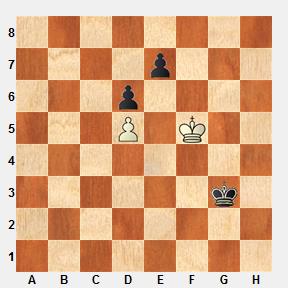
This position was the culmination of the board 1 game in last night's Melbourne Chess Club (MCC) Championship between Phillip Drew and Guy West. The game had been a hard fought Benko Gambit, where it seemed that the outsider was fully prepared in the opening. IM Guy West got the typical Benko position with queenside counterplay for the pawn, and after exchanges black's position seemed to get better. Eventually an endgame of rook and 4 pawns each was reached where neither side had a passed pawn and the game looked as if it was heading towards a draw.
However, the moral of this game must be that all players would benefit from a study of fundamental or basic endgames. Phillip as white blundered just 2 moves into this position. After 1.Ke4 Kxh4 White is a pawn down and should seek a draw with the opposition move 2.Kf4. However, Phillip played 2.Kf5 which looks plausible but Guy quickly outflanked his opponent with 2..Kg3.
Now white is lost, a tragedy for Phillip. But once again, you have to admire Guy West and his never say die attitude. Guy kept giving his opponent every chance to go wrong. It was a challenging opening, a hard fought middlegame with the main theme being positional compensation for a pawn, and then various transitional possibilities to different endgames. Phillip navigated well through all these difficult phases, but Guy kept on into the purely technical rook ending, and finally the theoretical pawn endgame, and it was in this last stage that his opponent finally blundered!
The result leaves Guy clear at the top with 5/5 before the week break for the Ballarat weekender. Guy is now a point clear of Ari Dale and Dusan Stojic and he has played both these talented young players. A further half point back on 3.5 is a group of 5 players, Chris Wallis, Domagoj Dragicevic, Justin Tan, David Hacche and Malcolm Pyke. Paul Kovacevic continued his good tournament with a draw against higher rated Dizdarevic. But there were a couple of upsets last night. First Finley Dale won against Richard McCart. But probably the biggest upset of the night was Tanya Kolak's victory against Jim Papadinis who is rated nearly 600 points higher!
Endgame knowledge is a big problem for most players, especially in today's ever speedier time controls. More emphasis is placed on tactics and openings than other parts of the game, but anyone who has lost a basic endgame, or been unable to win a clearly won position will know exactly how Phillip is feeling now. The answer is to devote a little of one's chess work on endgames. Karsten Mueller's articles at the chess cafe website are excellent, and some even relevant to a study of basic pawn endgames!
This position was the culmination of the board 1 game in last night's Melbourne Chess Club (MCC) Championship between Phillip Drew and Guy West. The game had been a hard fought Benko Gambit, where it seemed that the outsider was fully prepared in the opening. IM Guy West got the typical Benko position with queenside counterplay for the pawn, and after exchanges black's position seemed to get better. Eventually an endgame of rook and 4 pawns each was reached where neither side had a passed pawn and the game looked as if it was heading towards a draw.
However, the moral of this game must be that all players would benefit from a study of fundamental or basic endgames. Phillip as white blundered just 2 moves into this position. After 1.Ke4 Kxh4 White is a pawn down and should seek a draw with the opposition move 2.Kf4. However, Phillip played 2.Kf5 which looks plausible but Guy quickly outflanked his opponent with 2..Kg3.
Now white is lost, a tragedy for Phillip. But once again, you have to admire Guy West and his never say die attitude. Guy kept giving his opponent every chance to go wrong. It was a challenging opening, a hard fought middlegame with the main theme being positional compensation for a pawn, and then various transitional possibilities to different endgames. Phillip navigated well through all these difficult phases, but Guy kept on into the purely technical rook ending, and finally the theoretical pawn endgame, and it was in this last stage that his opponent finally blundered!
The result leaves Guy clear at the top with 5/5 before the week break for the Ballarat weekender. Guy is now a point clear of Ari Dale and Dusan Stojic and he has played both these talented young players. A further half point back on 3.5 is a group of 5 players, Chris Wallis, Domagoj Dragicevic, Justin Tan, David Hacche and Malcolm Pyke. Paul Kovacevic continued his good tournament with a draw against higher rated Dizdarevic. But there were a couple of upsets last night. First Finley Dale won against Richard McCart. But probably the biggest upset of the night was Tanya Kolak's victory against Jim Papadinis who is rated nearly 600 points higher!
Endgame knowledge is a big problem for most players, especially in today's ever speedier time controls. More emphasis is placed on tactics and openings than other parts of the game, but anyone who has lost a basic endgame, or been unable to win a clearly won position will know exactly how Phillip is feeling now. The answer is to devote a little of one's chess work on endgames. Karsten Mueller's articles at the chess cafe website are excellent, and some even relevant to a study of basic pawn endgames!
Labels:
benko,
blog,
Chess,
chess cafe,
Endgames,
guy west,
MCC,
MCC Championship,
robert jamieson
Monday, February 11, 2013
How Amazing is Social Media?
So, I'm a bit of a technophobe, and fairly reluctant to try new gadgets, but I have to say that I'm completely blown away recently by the power of the internet. I'm currently following live feeds on Twitter and the BBC news site over the shock announcement that the Pope is to resign. Now as a non Catholic, I'm not going to make comment on this turn of events, but it is a momentous piece of news. In fact Pope Benedict will be the first Pope to resign in office since Gregory XII in 1415. I am now an avid follower of Twitter, and when I'm online I will have a tab with it running while I do other things. Besides following various chess tweeters, and some authors and book sites, it is the news that mainly interests me, and I find the BBC coverage usually very good. I always have an alternative site news running so as to get a second opinion, though this second site changes. Currently I am following Sky News, but I think I'll change soon.
My main point of contact with others online is through Facebook, and I've found it an invaluable tool for following the progress of my family back in the UK, and for promoting chess and this blog. I must admit that I'm not too bothered about the number of 'friends' I have, or interests I follow. I guess we all use these social media tools for our own ends.
But personally I find the most useful thing about the internet is the way it has made following chess so easy. There are some sites which I regularly follow and have done for a very long time. Top of the list are my favourite 2 sites, The Week in Chess (TWIC) and the Chess Cafe. TWIC is a chess news site while Chess Cafe offers regular articles on all aspects of the game. I use TWIC as my main portal for watching live games. On the site there is a live chess game page, and links to other live games happening around the world. In fact, watching live games online is one of my favourite chess activities. My local chess club, the Melbourne Chess Club (MCC) has a digital board and I've been watching a game tonight which has been broadcast live. I see the game has just finished but I'm guessing the result has been put in wrong, as it looks as if white has forced mate rather than the game being a draw.
I also like to follow blogs. Some I have been looking at for a long time, while I like to try new ones out for a bit. My blogroll to the right of the page shows blogs I follow as do the links underneath. Some of these are updated more often than others and I've found a few more to follow. Kevin Spraggett's blog is excellent for chess. Spraggett is a Canadian GM and his chess posts are great reading material whether they are about parts of the game itself, or commentary about chess politics or culture. I also want to follow Denis Monokrousos' site as that also has a great deal of chess content. I'll be adding these 2 sites to the blogroll and following them for the next couple of months, at least until the end of the London Candidates.
My main point of contact with others online is through Facebook, and I've found it an invaluable tool for following the progress of my family back in the UK, and for promoting chess and this blog. I must admit that I'm not too bothered about the number of 'friends' I have, or interests I follow. I guess we all use these social media tools for our own ends.
But personally I find the most useful thing about the internet is the way it has made following chess so easy. There are some sites which I regularly follow and have done for a very long time. Top of the list are my favourite 2 sites, The Week in Chess (TWIC) and the Chess Cafe. TWIC is a chess news site while Chess Cafe offers regular articles on all aspects of the game. I use TWIC as my main portal for watching live games. On the site there is a live chess game page, and links to other live games happening around the world. In fact, watching live games online is one of my favourite chess activities. My local chess club, the Melbourne Chess Club (MCC) has a digital board and I've been watching a game tonight which has been broadcast live. I see the game has just finished but I'm guessing the result has been put in wrong, as it looks as if white has forced mate rather than the game being a draw.
I also like to follow blogs. Some I have been looking at for a long time, while I like to try new ones out for a bit. My blogroll to the right of the page shows blogs I follow as do the links underneath. Some of these are updated more often than others and I've found a few more to follow. Kevin Spraggett's blog is excellent for chess. Spraggett is a Canadian GM and his chess posts are great reading material whether they are about parts of the game itself, or commentary about chess politics or culture. I also want to follow Denis Monokrousos' site as that also has a great deal of chess content. I'll be adding these 2 sites to the blogroll and following them for the next couple of months, at least until the end of the London Candidates.
Labels:
bbc,
blog,
Chess,
chess cafe,
denis monokrousos,
facebook,
kevin spraggett,
MCC,
sky news,
TWIC,
Twitter
Thursday, February 7, 2013
Why Study Chess?
What inspires a player to study? Does one do it to improve, to research, for the fun of it? We are all eternal optimists hoping that we can still improve. I guess the fact that strong players maintained their strength late into their lives gives us all inspiration. However, the fact is that a player like Kortchnoi or Smyslov were absolute greats from a young age, so staying stronger later in life wasn't so much of a problem for them. Most of us aren't going to get much better after we hit 40 so why not just play and forget the study? Well, speaking personally, I find studying the game fascinating, its history, its characters, the games both great and relatively normal and the whole cultural melting pot that makes up this game of kings.
Secondly a game with Korchnoi as black against a King's Gambit specialist. This was played shortly before he emigrated in probably his last round robin in the Soviet Union before he left.
I coach kids and see very different reactions to the lessons I present. Some kids love stories and remember the most bizarre of things. Other kids enjoy puzzles, and even some chess based logical problems. There is an excellent monthly article at the Chess Cafe website by Jeff Coakley with some great testing puzzles. But what about adults? There are loads of products around to help players improve. For instance, there are books, DVD's, databases, computer playing programs, online chess clubs with online coaching. In fact there is so much stuff out there that it is almost impossible to know what will help you improve the most.
In my opinion adults can improve, even those of us above the dreaded 40, but having some knowledge of yourself is a very good place to start. We all learn in different ways, so do you prefer visual, audio or written learning? I love books and a chess board, but I probably learn more from playing through games in a database. I don't really enjoy DVD's, though I find short youtube type reports excellent. I hate playing computer programs, though I don't mind playing games at online chess clubs. What I find particularly useful is watching live games online, especially with Grandmaster commentary. As I said, we are all different so my likes and dislikes will be different to yours, but getting to know what you like can help you devise a program of study that can be enjoyable and rewarding. It may also be a good idea to ask a strong player to help you choose some products if you want to buy books or DVD's. There is so much that it's difficult to know what to get. Employing a coach for a few sessions can also guide you in the right direction.
Saying that, any study is better than none, though study directed at your own level will obviously be more effective. As for me, I enjoy looking at games of great players of the past (instead of beefing up my opening repertoire, or working on my positional understanding). I have some particular favourites who seem to somehow resonate with me. I particularly enjoy playing through the games of Reshevsky and Korchnoi. Both were immigrants, which I can empathise with, and both were great fighters which I fully appreciate. Although both were positional masters, they were both great tactical players and attacking players so when looking through their games you get the full range of types of game. Here's a couple of games that you wouldn't necessarily associate with these 2 heroes of mine, both in that most romantic of openings, the King's Gambit.
Firstly, the young Reshevsky playing a simul in Berlin aged about 8. Sammy was white, though I don't know the name of his opponent.
Secondly a game with Korchnoi as black against a King's Gambit specialist. This was played shortly before he emigrated in probably his last round robin in the Soviet Union before he left.
Labels:
chess cafe,
chess coaching,
kings gambit,
korchnoi,
reshevsky
Sunday, October 7, 2012
Endgame Epiphany
There comes a time in every players chess development when you suddenly realise that you don't know enough about the endgame. Most players fall into the trap of working on opening variations, and getting good positions, only to go wrong sometime later in the game. It is usually a combination of a painful result such as an easy win that turned into a loss, some jovial ribbing from our opponent who can't believe his luck, and one of the chess club's elder statesman shaking his head in an "I told you so" sort of way that finally leads us to the fact that we need to work on this part of our game. Remember the old adage, "the hardest part of chess is winning a won game"? That's why we have to work on our endgames.
Of course, the problem with studying endgames is that it is very theoretical and starts from the wrong end of the game! This makes it difficult to apply to our games. As an example, my first book on the endgame was "Practical Chess Endings" by Paul Keres. I was attracted by the title, and knew that Keres was one of the greatest players in chess history. However, I just couldn't get into the book which was laid out in a text book type fashion. Funnily enough, since working on the endgame, I have looked at this book again and realised how good it is. It is an excellent one book compendium taking a player to a competent level of endgame play, but it is not didactic. In fact, I would go as far to say that unless you had some previous knowledge of endgames, the book can be downright boring! And of course, it is not the only endgame book like this.
To learn how to play endgames, most players need to learn theory after general principles. To apply endgame knowledge we must know things such as using a king, restricting our opponent's king, creating passed pawns, defending material, how pieces work together and against other pieces, strong and weak pawns, space and how to create plans. The best set of general principles I've seen are listed on Exeter Chess Club's website. These are pearls of wisdom taken from a number of sources and conveniently placed together.
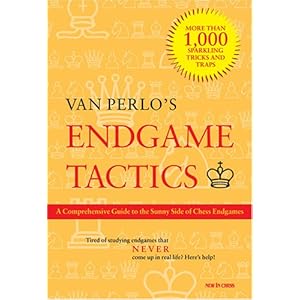
Another important aspect in teaching endgames is inspiring players. If the subject matter comes across as boring, then it will be harder to focus, and may even prevent a player from trying (that's what Keres book did for me). Somehow endgames need to be made interesting, and some books have certainly achieved this. The book that first made an impression on me was Chernev's "Capablanca's Best Chess Endings". In this book, Chernev not only explained the endgames, but made it a personal tribute to Capablanca, who he obviously admired. There is a similarly inspirational book about another world champion, "Vassily Smyslov, Endgame Virtuoso". These books which single out a player and take the way they play a certain aspect of the game are great introductions. They are relatively lightweight giving us an introduction into endgames which would then make a textbook such as Keres' more accessible. Another great book to introduce oneself to endgames is van Perlo's award winning "Endgame Tactics".
Once inspiration has sunk in, players can go about improving their knowledge of specific endgames. Again, I think that books that go from a-z, that is king and pawn versus king through pawn endgames onto queen endgames, rook endgames minor pieces and so forth are not the books to go for. These sorts of books are in my opinion more like reference works. They have their place on a bookshelf, so they can be referred to after an endgame has been played. Actually, I prefer books which jump around a bit and "Silman's Complete Endgame Course" is an excellent example of this.
As you get more and more into endgames, you start to look at more and more types and more theoretical endgames. You also start to see in your games plans early on which have reference to possible endgames which might arise. I have been using 2 resources regularly for quite a while now, that analyse contemporary endgames. In the daily chess newspaper, "Chess Today" GM annotators (especially Alexander Baburin) look at practical endgames regularly. Here the emphasis is most definitely practical as the examples come from real, recent games. However, there is often a theme put to an article (eg recent rook endgames, minor piece endgames from the Olympiad etc) and often the examples are put into their theoretical context. The other great resource is GM Karsten Muller's articles on chess cafe, and chessbase. Again, these are varied and based on practical examples, but placed into a theoretical setting. So you get the best of both worlds, some interesting examples explained in general terms with more concrete theory to back this up. In fact, it would be well worth looking through the archives of chess cafe and going through Muller's old articles. He has written so many that compiled they would become an excellent book on chess endgames.
So, once the epiphany has come about and you realise you have to do something about the endgame, get inspired about the work you are about to undertake. Believe me, once you get into endgames, they are great fun to work on. But you have to get in to them in the first place. So start with a book like van Peerlo's, then move on to something like Silman's, and all the while check through the stuff on chess cafe, and subscribe to a resource like chess today. And best of all, get someone to work with, because it's easier to have a study companion or to work in a group than it is to plough through these on your own....at least to start with. I'll be adding some endgame material on this blog in the future (basically, rehashing my old MCC Endgame Group), which will hopefully be inspirational :)
Of course, the problem with studying endgames is that it is very theoretical and starts from the wrong end of the game! This makes it difficult to apply to our games. As an example, my first book on the endgame was "Practical Chess Endings" by Paul Keres. I was attracted by the title, and knew that Keres was one of the greatest players in chess history. However, I just couldn't get into the book which was laid out in a text book type fashion. Funnily enough, since working on the endgame, I have looked at this book again and realised how good it is. It is an excellent one book compendium taking a player to a competent level of endgame play, but it is not didactic. In fact, I would go as far to say that unless you had some previous knowledge of endgames, the book can be downright boring! And of course, it is not the only endgame book like this.
To learn how to play endgames, most players need to learn theory after general principles. To apply endgame knowledge we must know things such as using a king, restricting our opponent's king, creating passed pawns, defending material, how pieces work together and against other pieces, strong and weak pawns, space and how to create plans. The best set of general principles I've seen are listed on Exeter Chess Club's website. These are pearls of wisdom taken from a number of sources and conveniently placed together.
Another important aspect in teaching endgames is inspiring players. If the subject matter comes across as boring, then it will be harder to focus, and may even prevent a player from trying (that's what Keres book did for me). Somehow endgames need to be made interesting, and some books have certainly achieved this. The book that first made an impression on me was Chernev's "Capablanca's Best Chess Endings". In this book, Chernev not only explained the endgames, but made it a personal tribute to Capablanca, who he obviously admired. There is a similarly inspirational book about another world champion, "Vassily Smyslov, Endgame Virtuoso". These books which single out a player and take the way they play a certain aspect of the game are great introductions. They are relatively lightweight giving us an introduction into endgames which would then make a textbook such as Keres' more accessible. Another great book to introduce oneself to endgames is van Perlo's award winning "Endgame Tactics".
Once inspiration has sunk in, players can go about improving their knowledge of specific endgames. Again, I think that books that go from a-z, that is king and pawn versus king through pawn endgames onto queen endgames, rook endgames minor pieces and so forth are not the books to go for. These sorts of books are in my opinion more like reference works. They have their place on a bookshelf, so they can be referred to after an endgame has been played. Actually, I prefer books which jump around a bit and "Silman's Complete Endgame Course" is an excellent example of this.
As you get more and more into endgames, you start to look at more and more types and more theoretical endgames. You also start to see in your games plans early on which have reference to possible endgames which might arise. I have been using 2 resources regularly for quite a while now, that analyse contemporary endgames. In the daily chess newspaper, "Chess Today" GM annotators (especially Alexander Baburin) look at practical endgames regularly. Here the emphasis is most definitely practical as the examples come from real, recent games. However, there is often a theme put to an article (eg recent rook endgames, minor piece endgames from the Olympiad etc) and often the examples are put into their theoretical context. The other great resource is GM Karsten Muller's articles on chess cafe, and chessbase. Again, these are varied and based on practical examples, but placed into a theoretical setting. So you get the best of both worlds, some interesting examples explained in general terms with more concrete theory to back this up. In fact, it would be well worth looking through the archives of chess cafe and going through Muller's old articles. He has written so many that compiled they would become an excellent book on chess endgames.
So, once the epiphany has come about and you realise you have to do something about the endgame, get inspired about the work you are about to undertake. Believe me, once you get into endgames, they are great fun to work on. But you have to get in to them in the first place. So start with a book like van Peerlo's, then move on to something like Silman's, and all the while check through the stuff on chess cafe, and subscribe to a resource like chess today. And best of all, get someone to work with, because it's easier to have a study companion or to work in a group than it is to plough through these on your own....at least to start with. I'll be adding some endgame material on this blog in the future (basically, rehashing my old MCC Endgame Group), which will hopefully be inspirational :)
Labels:
Capablanca,
Chess,
chess cafe,
chess today,
chessbase,
Endgames,
exeter chess club,
Keres,
muller,
silman,
smylov,
van perlo
Subscribe to:
Posts (Atom)