At the in between sort of age of 48 I still feel pretty young, except when I've just been for a run when I feel nearly dead. I guess my life has slowed down compared to what I was like in my 20's (playing chess on average 3 times a week is too much for me nowadays!) but I'm still pretty active and positive in my thoughts.
Just before Christmas I was sat in a cafe having my favourite long black and croissant with the radio playing in the background engrossed in a novel. Well, engrossed is a bit strong as the book wasn't particularly good. Let's say I was getting through the book as best I could with a dogged determination to finish it no matter what, typical of the British 'stiff upper lip spirit'. (Since then I've finished the book and I now wish that I'd listened to my reason and stopped reading early on. I'll admit "The Miniaturist' had its moments, but I really didn't enjoy it and essentially that is why I read novels!) Anyway, I had zoned out of the novel for a moment when I thought I heard the words "Bobby Fischer" from somewhere.
My first reaction was to think I was going a bit bonkers and secondly I sniffed my coffee just to make sure there was nothing funny in it. Surprisingly, "The House of Bread and Pastries" on Martin Street in Gardenvale do a very respectable coffee for what is essentially a bakery. I've certainly been to cafes which have served worse coffee. The coffee is smooth with a rich texture and a slightly roasted flavour. It isn't brilliant, but if it was the worse coffee I ever had I would die a happy man. At least in terms of coffee.
Ok, back to my senior moment. Hearing the name of a chess player for no apparent reason was a bit worrying, but then I heard it again, unmistakably on the radio. So I strained my failing hearing and there it was.
I think like Bobby Fischer.
I was so happy that I wasn't going a bit loopy, and that I wasn't going to have to call in work claiming I needed a mental health day off, that it didn't even register how crap the song was. At first. I had no idea who it was or even how to find out, but my smart phone and google were my friends and I now know that the song was "Cosby Sweater" by the Hilltop Hoods. See what you think. Am I getting old?
Showing posts with label fischer. Show all posts
Sunday, December 28, 2014
Saturday, April 20, 2013
Whoops, there goes the Queen :(
When you teach primary school kids chess, you realise that there are successes in a chess game other than checkmate. I'm convinced that most under 10's get more of a buzz from capturing a queen, or promoting a pawn, than they do from checkmate. Partly, I guess, this is because the queen has a large material value and, as Madonna said, we're living in the material world. Also, capturing the queen is an obvious coup, when for some of these kids, checkmate is not obvious, even when they have played it. In fact, checkmate can sometimes be an anti-climax as it can sometimes take a while to sink in that they actually have delivered checkmate!
Anyway, it always keeps kids entertained when you ask them questions about trapping queens. Here's the few I showed today.
Black here played the unfortunate 1..Nc7?? White won himself a queen with 2.Na4 Qa5+ 3.Bd2
Again a blunder from black. I asked my kids how black should get out of check. Of course, they all saw that they had to move their king and the king could take the knight right in front of it for free! But 1..Kxe6 costs black a queen after either 2.Nb6+, or even better 2.Nf6+.
And finally a classic. This is Fischer-Reshevsky USA ch 1958. Reshevsky had just blundered, dropping his knight back to e8 when he should have exchanged the Na5 for white's light squared bishop on b3 Perhaps the experienced Reshevsky wasn't taking his young opponent totally seriously, as he allowed the spectacular 1.Bxf7+!! and every line sees the black queen in trouble:
1..Kh8 2.Ne6! winning the queen
1..Rxf7 2.Ne6! winning the queen
1..Kxf7 (played by Reshevsky) 2.Ne6! wins the queen as 2..Kxe6 3.Qd5+ leads to mate 3..Kf5 4.g4! Kxg4 5.Rg1+ Kh4 6.Qe4+ Kh3 7.Qg2+ Kh4 8.Qg4# Reshevsky played 2..dxe6, lost his queen and later the game. How good was Fischer?! He was only 15 years old when he beat USA no 1 in this game!
The moral to the story is always keep an eye out for your opponent's queen especially if it has few squares left to go to!
Anyway, it always keeps kids entertained when you ask them questions about trapping queens. Here's the few I showed today.
Black here played the unfortunate 1..Nc7?? White won himself a queen with 2.Na4 Qa5+ 3.Bd2
Again a blunder from black. I asked my kids how black should get out of check. Of course, they all saw that they had to move their king and the king could take the knight right in front of it for free! But 1..Kxe6 costs black a queen after either 2.Nb6+, or even better 2.Nf6+.
And finally a classic. This is Fischer-Reshevsky USA ch 1958. Reshevsky had just blundered, dropping his knight back to e8 when he should have exchanged the Na5 for white's light squared bishop on b3 Perhaps the experienced Reshevsky wasn't taking his young opponent totally seriously, as he allowed the spectacular 1.Bxf7+!! and every line sees the black queen in trouble:
1..Kh8 2.Ne6! winning the queen
1..Rxf7 2.Ne6! winning the queen
1..Kxf7 (played by Reshevsky) 2.Ne6! wins the queen as 2..Kxe6 3.Qd5+ leads to mate 3..Kf5 4.g4! Kxg4 5.Rg1+ Kh4 6.Qe4+ Kh3 7.Qg2+ Kh4 8.Qg4# Reshevsky played 2..dxe6, lost his queen and later the game. How good was Fischer?! He was only 15 years old when he beat USA no 1 in this game!
The moral to the story is always keep an eye out for your opponent's queen especially if it has few squares left to go to!
Tuesday, January 8, 2013
Re-read the Classics
I saw an article challenging readers to read one classic book for every new book one reads. Now while I think this is a great idea I'm very much an impulse reader. I tend to read a load of mindless fantasy or crime fiction interspersed with the odd binge of literary novels. I read very little non fiction but manage some history articles every once in a while, especially regarding Stuart England. I read quite a bit to do with chess, though again, not so much as I would like.
So I've decided to take up the challenge, though in a slightly modified form. For every new book I read, I will read (or re-read) a classic book OR an historical non fiction book. History was always my favourite subject at school and my recent visit to England rekindled my joy of the subject. While in London I visited Westminster Abbey which I'm ashamed to say I'd never been inside before, even when I lived in London! Seeing the tombs of kings and queens and the monuments to the famous, especially in poets corner, made me realise how little I really know about the country of my birth. Of course, I know even less about the history of my adopted country, Australia, so I'm equally fascinated by that as well.
Chess is a large part of my life so I'm setting myself a similar challenge there, which ches players might like to join me in. For every modern game (read that as played in 2012 and 2013) I analyse, I intend to analyse a classic game. I am classifying classic games as at least 50 years old which means 1963 or earlier. Of course, 1963 was the year Botvinnik was dethroned for the last time as World Champion by Petrosian and that Bobby Fischer scored 11/11 at the USA Championship and I really know very little about these games.
So I've decided to take up the challenge, though in a slightly modified form. For every new book I read, I will read (or re-read) a classic book OR an historical non fiction book. History was always my favourite subject at school and my recent visit to England rekindled my joy of the subject. While in London I visited Westminster Abbey which I'm ashamed to say I'd never been inside before, even when I lived in London! Seeing the tombs of kings and queens and the monuments to the famous, especially in poets corner, made me realise how little I really know about the country of my birth. Of course, I know even less about the history of my adopted country, Australia, so I'm equally fascinated by that as well.
| The inspirational Westminster Abbey |
![]() |
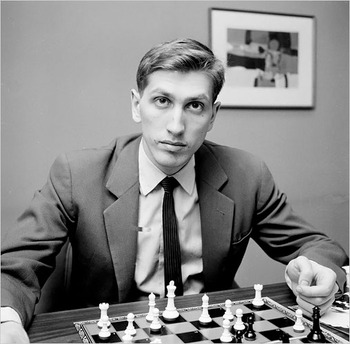
| Bobby Fischer |
Sunday, October 28, 2012
Game Preparation
So what is game preparation all about then? I've had a whole free day to prepare for my game against IM Guy West tomorrow. What should I have done? Should I have played through loads of his games? Should I have some opening systems worked out for what he will most likely will play against me?
Actually, I don't know if I'm from the wrong era when it comes to preparation, but for me chess preparation tends to be a bit hit and miss. There are times when I get into some very specific opening preparation for particular opponent's. At other times, however, I hardly prepare at all and just play it by ear. To be honest, I haven't really got round to much specific preparation for this tournament. I have found it difficult to stay focused on the matter in hand. There are just so many interesting things to look at...
...and is it really that bad to work on things on a more general level? Wasn't it Botvinnik who said that chess is the art of analysis? I've seen some really nice chess things today, that I'll share them now.
It's always important to spot tactical threats. Here, it's white to move and his next move won material.
This is, of course, an easy one, but nice nevertheless. White played Ned5 and black resigned. The moral of the story is never forget about the centre of the board. Pieces can often make surprising moves into the centre, pawns can often be taken surprisingly...just look at this next one.
This was the game Naumann-Rapport Bundesleague 2011/2. Black here played 25..Bd4, tempting his opponent to trap his queen with 26.Rf3
So did black resign? Nope, he played 26..Nxc4!!
What a stunning position. White can't take the queen, the knight or the bishop. So what can white do? 27.Nxd6!! A stunning rejoinder looking to lure the Nc4 away from defending it's queen. Resignation time for black again?
27..Rxf4!! OMG, what the hell is going on in this game??
Pretty much everything of black is en prise, including the queen!! The game concluded, 28.Nxf4 Nxf4+ 29.Rxf4 Qxf4 30.Nxc4 Qg4+
and it ended in a perpetual draw 31.Kh2 Qh4 32.Kg2 Qg4+ 33.Kh2 Qh4+
An amazing sequence of moves, but the position which most impressed me today was a classic pawn ending (ok, I was looking at some pretty random stuff today :D).
This position occurred in the game Fischer-Bisguier US Championship 1959. It seems like a straightforward win for white who has an outside passed pawn that he just has to use to decoy the enemy king. 1.Kf3! [The immediate 1.g5 would only draw after 1..Kf5 2.Kd4 Kxg5 3.Kxc4 Kf6 and black's king gets back in time] 1..a5 2.Ke3 a4 and now that black has created a second weakness on the queen side, 3.g5! decoying black's king 3..Kf5 4.Kd4 Kxg5 5.Kxc4 Kf4 6.Kb4 Ke3 7.Kxa4 Kd2 8.Kb3 Kd3 9.c4 Kd2 10.Ka4 Kc2 11. Ka3 Kd3 12.Kb3 b6 13.Kb4 Kc2
And so it seems that white has it easy with an extra pawn and black's king on the wrong side of the pawns. However, that would be the worst thing you could think, and Fischer was up to the task with some accurate play. 14.Ka3! [The obvious 14.Kb5 fails to 14..Kb3, while 14.b3 also only draws after 14..Kb2 15.Ka4 Kc3 16.Ka3 Kd3!] 14..Kd3 15.Kb3 Kd2
16.Ka4! finally clearing the way for the b-pawn to run 16..Kc2 [16..Kd3 17.Kb5] 17.b4 and black finally resigned as there is no stopping white from promoting on the c-file.
So, I feel fully prepared for my game tomorrow night. I've seen some amazing games, some great tactics and fabulous endgames. As for specific preparation....who was it I'm playing? ;)
Actually, I don't know if I'm from the wrong era when it comes to preparation, but for me chess preparation tends to be a bit hit and miss. There are times when I get into some very specific opening preparation for particular opponent's. At other times, however, I hardly prepare at all and just play it by ear. To be honest, I haven't really got round to much specific preparation for this tournament. I have found it difficult to stay focused on the matter in hand. There are just so many interesting things to look at...
...and is it really that bad to work on things on a more general level? Wasn't it Botvinnik who said that chess is the art of analysis? I've seen some really nice chess things today, that I'll share them now.
It's always important to spot tactical threats. Here, it's white to move and his next move won material.
This is, of course, an easy one, but nice nevertheless. White played Ned5 and black resigned. The moral of the story is never forget about the centre of the board. Pieces can often make surprising moves into the centre, pawns can often be taken surprisingly...just look at this next one.
This was the game Naumann-Rapport Bundesleague 2011/2. Black here played 25..Bd4, tempting his opponent to trap his queen with 26.Rf3
So did black resign? Nope, he played 26..Nxc4!!
What a stunning position. White can't take the queen, the knight or the bishop. So what can white do? 27.Nxd6!! A stunning rejoinder looking to lure the Nc4 away from defending it's queen. Resignation time for black again?
27..Rxf4!! OMG, what the hell is going on in this game??
Pretty much everything of black is en prise, including the queen!! The game concluded, 28.Nxf4 Nxf4+ 29.Rxf4 Qxf4 30.Nxc4 Qg4+
and it ended in a perpetual draw 31.Kh2 Qh4 32.Kg2 Qg4+ 33.Kh2 Qh4+
An amazing sequence of moves, but the position which most impressed me today was a classic pawn ending (ok, I was looking at some pretty random stuff today :D).
This position occurred in the game Fischer-Bisguier US Championship 1959. It seems like a straightforward win for white who has an outside passed pawn that he just has to use to decoy the enemy king. 1.Kf3! [The immediate 1.g5 would only draw after 1..Kf5 2.Kd4 Kxg5 3.Kxc4 Kf6 and black's king gets back in time] 1..a5 2.Ke3 a4 and now that black has created a second weakness on the queen side, 3.g5! decoying black's king 3..Kf5 4.Kd4 Kxg5 5.Kxc4 Kf4 6.Kb4 Ke3 7.Kxa4 Kd2 8.Kb3 Kd3 9.c4 Kd2 10.Ka4 Kc2 11. Ka3 Kd3 12.Kb3 b6 13.Kb4 Kc2
And so it seems that white has it easy with an extra pawn and black's king on the wrong side of the pawns. However, that would be the worst thing you could think, and Fischer was up to the task with some accurate play. 14.Ka3! [The obvious 14.Kb5 fails to 14..Kb3, while 14.b3 also only draws after 14..Kb2 15.Ka4 Kc3 16.Ka3 Kd3!] 14..Kd3 15.Kb3 Kd2
16.Ka4! finally clearing the way for the b-pawn to run 16..Kc2 [16..Kd3 17.Kb5] 17.b4 and black finally resigned as there is no stopping white from promoting on the c-file.
So, I feel fully prepared for my game tomorrow night. I've seen some amazing games, some great tactics and fabulous endgames. As for specific preparation....who was it I'm playing? ;)
Sunday, October 21, 2012
Chess in the Future?
This weekend I was fortunate enough to be involved in a chess tournament with a massive amount of technology. Chesskids organised a Victorian Youth Championship which was held at Swinburne University's new KIOSC building, a state of the art technology centre. The tournament was for kids below 15, but it was envisaged as an elite junior event as chesskids already runs a number of tournaments for players who are new to tournament chess, or have little experience.
While the kids were playing in near by classrooms (large laboratory style spaces, with lots of natural light) the main hub area of the event was a room with amazing facilities, including touch screen monitors, and computer to wall display projectors. Thus we were able to link the touch screens to interactive chess sites, such as chesstempo, promoting self improvement plans to kids and parents.
Projecting computer screens on to the wall allowed us to commentate on games, give lessons to kids and parents, and follow the action live as it was happening. Yes, I do mean live, and this was because of another innovation. Chesskids have developed their own tournament management software, tornelo. Tornelo is more than just a pairings program. It processes tournament entries, acts as a pairing program and allows for games to be entered and stored. This last facility was the big one for me this weekend. With the support of Swinburne University, we had the use of a number of Ipads which the kids used as score sheets to record their games. This meant that we saw the moves as they were being made (and some parents with their own laptops/Ipads were following their own kid's game).
The significance of this technology has never been apparent to me. I guess I'm just too old to see the way these things work. Well, my eyes were opened this weekend. As I was commentating on some games it suddenly struck me that we were able to see games by players, some of whom are pre-school and who probably wouldn't be able to write their moves down. Wouldn't it have been amazing if this would have been around to record the games of an infant Fischer, or Kasparov, and on the other hand, I also wondered whether we were recording the games of future Grand Masters?
Technology aside, this was still a kids chess tournament and all I saw was kids having fun, playing chess, socialising with friends and generally enjoying their competitive weekend. The results can all be found on the tornelo page, along with a database of over 200 games (check out the link at the top of the page). The winners of each section won $150 but more importantly, they each won a trophy!
![]() |
| Interactive Touch Screens |
![]() |
| Projected Wall Displays |
![]() |
| Live Commentary with IM Robert Jamieson |
![]() |
| Scoresheet of the Future |
![]() |
| "Where's my Ipad?" |
![]() |
| Some still preferred pen and paper |
Technology aside, this was still a kids chess tournament and all I saw was kids having fun, playing chess, socialising with friends and generally enjoying their competitive weekend. The results can all be found on the tornelo page, along with a database of over 200 games (check out the link at the top of the page). The winners of each section won $150 but more importantly, they each won a trophy!
![]() |
| Joint Winners of under 7's admiring their prizes! |
Labels:
chesskids,
chesstempo,
fischer,
ipads,
kasparov,
robert jamieson,
swinburne university,
technology,
tornelo
Subscribe to:
Posts (Atom)