Tuesday, July 9, 2013

Opening Study

Ok, so I'm curious. How much opening study do you do? What percentage of your time is spent studying openings compared to looking at other aspects of chess? I will admit that as I've got older, it has become a less consuming part of my chess study and I now spend more time looking through games, working through tactical puzzles, and looking at endgames. I have some vague opening ideas that have been picked up over the years, but to be honest, I'm no expert on any opening.

Now I guess this brings some good and bad. On the plus side, it makes me quite flexible and imaginative. I'm not tied to theoretical systems, and am not trying to uphold the honour of certain variations. I play a number of different openings, all equally averagely, and just kind of find myself in a middlegame position all of a sudden, which I just start working on over the board. As FM Bill Jordan once said to me "you can only be out-theoried by one move" as when you make that move which your opponent doesn't recognise they are also on their own to some extent. Of course, this is a simplification of the issue, as studying opening systems should enable players to develop feel for typical positions as well as knowing the best theoretical lines. On the down side I don't get many cheap points in games and have to work hard at the board from fairly early on in games. While my general understanding of chess might not be that bad, my specific understanding of certain openings will be poor meaning that I am missing chances of getting the best start to games.
The Tarrasch

So the question is, 'am I bothered about it'? Well in some ways yes, but generally no. I am well past the stage in my life where I have that many goals to achieve in chess, and virtually none of my goals are to do with playing myself. However, as I've started playing less chess, and less seriously, I've found that I'm enjoying looking at theoretical works more. I have started playing games on chess.com using a time limit of 3 days per game, and have started studying openings through that, like I imagine correspondence players do, though I would never consider myself one of them! I've also been working with stronger kids than in the past, and I could really do with helping them with openings as well as other parts of their game.
Sicilian Najdorf

So I've decided, at the age of 46, I'm going to start looking at openings again (probably the first serious opening study I've done in the past 25 years!). I will share some ideas here, though of course, you'll have to be ready to accept the openings that I choose. And talking about choosing, the whole subject of openings is pretty massive, so finding a starting point is a pretty daunting prospect. So I'll even tell you where I'm going to start looking. I'm going to try to go in depth into the following openings:

- Tarrasch Variation of the Queen's Gambit
- Four Knight's Opening
- Sicilian, especially Najdorf (my great favourite as a junior).

I think these systems offer a wide range of styles of play, from opposite side castling to isolated queen pawns, gambits to near symmetrical systems, pawn minorities, pawn majorities, and broken pawn structures compensated by pieces. I find these imbalances, and I suppose balances, the main interest in the opening and where it leads us to in the middlegames. I'll be playing these systems a lot as well, so if you do play me in a tournament, or online, there's a good chance I'll play one of these openings, if allowed. I remember back in the 1970's or early 80's in the UK, IM Mike Basman announcing that he would be playing 1.b4 or 1.g4, and the same things in reverse when he played in tournaments, allowing players to prepare for him. I think that was a pretty amazing thing to do, so I'm basically doing the same thing. Well almost, as I get bored easily by openings, so I apologise in advance if you've prepared one of those systems against me and I come up with something completely different! Of course, you can be content that I won't know that opening better than any other system I play!!
Four Knight's Opening
I will gratefully accept any help and analysis on these openings, and once I start publishing some opening ideas, I'll gladly accept criticism of them. Watch this space, and let's get these openings understood!

Sunday, July 7, 2013

Teams Chess and Magazines

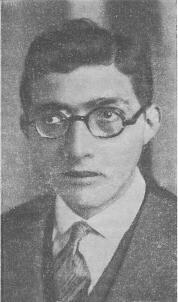
I've been away for a few days and when I arrived home I found a New in Chess magazine waiting for me. I haven't bought these magazine's for a long time, and had forgotten how much content they contain. I was browsing a bit, and reading quite a bit which is something that NiC magazine has over Informator style publications. I like the tournament reports, the interviews and editorial style pieces. In fact, I enjoy the written word much more than the symbols that all chess players eventually get used to, and even start using as language (after that it's "plus-minus"). It's good to read what top players were thinking during the games they analyse and their reasons for choosing moves and plans.

New in Chess magazine with excellent quality material
The current issue of New in Chess Magazine has tournament  reports from the Zug Grand Prix, the Alekhine Memorial, the Norway Chess Spectacular and the US Championships. All of these were great events, and all of them had great online live coverage which makes magazine reports seem somehow obsolete. However, the NiC reports bring an extra dimension with great game analysis and GM reports bringing inside information about the events. Besides these reports, the current magazine has interviews with GM's Topalov and Hammer, an historical article on Carlos Torre and interesting commentary articles by GM's Short and Ree. I guess that the New in Chess editorial team realise that live chess with Houdini style immediate analysis is giving many players all they need of chess analysis. So instead the magazine is filled with expert commentary, ideas, photo's and the emphasis is on quality of material.
Carlos Torre Repetto
The article by Nigel Short I found very interesting, and somewhat frustrating. Short's double page article contains no actual chess moves, but it tells his story of recent adventures in club chess. Nigel does a great job of describing the tension that team chess can generate, the bonds that can develop by playing regularly for a team, and some issues that only team chess can bring up, such as board orders and not knowing which players the opposing team will have playing on a given date. These were issues that I grew up with in the UK, and I've experienced the joys of winning games for my team and the misery of losing games that cost us matches (the worst being when you turn a winning position into a losing one, which feels a million times worse when the rest of your team are looking over your shoulder!).

So why did I find Nigel's article frustrating? Nothing to do with the article, which helped bring back some memories of team matches I've played. Rather it is because here in Melbourne, team chess seems to have died away again. When I first arrived here, there was a dwindling teams competition which finally died out for a couple of years. I then helped to rejuvenate it, and for the past couple of years there has been a teams event. However, we have heard nothing so far this year from Chess Victoria about a teams event. I'm beginning to think that the State body aren't the best organisation for running such an event, and a separate league organisation would be better. This was my original idea when I first hatched the plan over 2 years ago, but CV President, Leonid Sandler said it would be better under CV auspices. However, Chess Victoria is a voluntary run organisation that has its hands full with the events they currently organise, let alone taking on the burden of other tournaments. There's just too few people with too little time. A sad fact.
GM Nigel Short (second left) with Iranian Bronze medal winning team from the  2006 Asian games (from chessbase)
What I think we need is a dedicated league which perhaps can be incorporated into Chess Victoria, but which is a separate entity and responsible for the organisation of team chess across the city and even the state. It would be good if the chess clubs around Victoria became involved in the league administration, but a small and dedicated committee is needed, at least to start with. If the league grows, then so can the organisation. The feedback I received from the team's events was mostly all positive, so there are plenty of people who want this form of chess. It just takes a bit of work to organise. So should I try to organise a league, perhaps for 2014? Would anyone be prepared to help?

Friday, July 5, 2013

Last Day of Chess Camp

The 2013 Chess Kids camp finished with a day of serious play.After clearing out of our cabins, the kids had one more coaching session this morning before getting on with tournament games. The kids had been placed into 7 teams, and they were to play a round robin event. Before today, they had played 4 rounds so there were 3 games left to play. There was a great deal of tension around the games as each player was trying to win their board prize. In the end the event was very close which meant that our seeding of players into teams worked well. Before we headed off there was a prize giving, with loads of books, t-shirts, caps and other things given out tot he kids.

I think everyone had a good time and I'm sure all the kids will go away with some great memories of this camp, and with a better appreciation of chess endgames, and a better understanding of chess generally. Some parents came along, and they did a great job helping out around the scenes, making the jobs of the coaches somewhat easier. It meant I had more energy to spend on actual coaching, as I needed to do less child minding over the 4 days. I've already been talking to David Cordover about next year's camp. Last year we had a good time in Hobart, Tasmania, but we wanted to make it even better this year, and I think we succeeded. We won't sit still though, and hope to make it even better next time round!

I'm pretty tired after the camp so I'm leaving this post fairly short. Here's a final few photo's of the last day of the camp.

Good play is encouraged, good sportsmanship demanded

The Winning Team, l-r Ryan, Ethan, Oliver, Daniel and Yoni

Top board 1 player, Rebecca

Thursday, July 4, 2013

Chess Camp Day 3

The weather took a turn for the worse today, but when you're a chess player that's usually a good thing as it means more indoor time. Unfortunately, today was scheduled as excursion day, which meant we spent quite some time outside. The day started with a round of tournament chess before breakfast, and there is no doubt that the games are becoming tougher as the tournament goes on. Any early nerves, or excitement are over and the kids are just getting down to fighting it out with other kids around the same strength. With every game a tough game, and with chances of the result going any way, I am even more convinced that round robin formats are the best test of skill for players.
I was impressed by this position today. Mikaela, as black is a pawn down, but found a way to become material ahead. Can you beat the tactical vision of a kid? Black to play and win.

After the morning game we took off on our excursion for the day. First stop was A Maze n' Things in the centre of Phillip Island. Besides having a very big fence maze (the biggest in Australia), there are lots of interesting attractions to explore, including sensory illusions. The kids had great fun going round this (the adults did too!) and then we held a blitz chess tournament through lunch which included a barbecue. The blitz session was held outside, which was a bit cold, but none of the kids seemed bothered and the tournament was hard fought with Max Phillips (1212) being the winner on 6/7.

First stop for the day

None of the players lost their heads during the day

Al fresco blitz tournament and barbecue
After the blitz, we all got back on the bus, and headed to Phillip Island's chocolate factory. As can be imagined, this brought great excitement to everyone. The chocolate factory has an interesting tour exploring how chocolate is made, it's origins, history, flavours, manufacture and some activities for kids (and adults) to take part in. Of course, there's a shop and cafe with many specialty chocolates and other goods for sale.

Chocolate sculpture of "David"

Chocolate Moose :D
After all that, and some sports when we arrived back at the camp (basketball, rock climbing), the kids still had the energy to go through another coaching session on endgames before the evening meal. I obviously can't speak for the other coaches, but the group I worked with tried really hard, and the session went very well (we were talking about minor pieces in the endgame, and the differences between knights and bishops.

It's been a pretty exhausting camp but thoroughly enjoyable. Tomorrow we will all be heading off home (though not before more games and coaching) and hopefully all the kids will be taking some fond memories away with them. Friendships have been developed, chess skills have been improved, and fun has been had by eveyone.

Wednesday, July 3, 2013

Second Day at Chess Camp

The second day of the chess camp has been the hardest from the point of view of the kids and chess. They have had to play 2 tournament games, and have 3 coaching sessions, which perhaps on reflection, might have been too intense, especially for some of the younger ones. Saying that the sheer quantity of material that the kids are getting through, and the great quality of coaching, is paying dividends. I had a group of the least experienced players today in a session looking at pawn endings which is a subject they've already touched upon in other sessions. They recognised concepts such as 'opposition', 'passed pawns' 'shoudering' and 'breakthroughs' which made my lesson more of a reinforcement rather than pure teaching. As a result, I was able to test these kids ability to put these ideas into practice, and when one idea may have priority over another.

The kids have to play tournament games, and the position above is from a game this afternoon. The games are played at a rate of 25 + 10 and the kids have to record their games (some kids are learning to record!). After the games, the kids analyse their game with their opponent and a chess coach. I was watching the game above as it finished. It was black to play and the game continued 1..Rb2 2.Rxf4 Rf2 3.Kxe3 Rxf4 0-1 I asked after the game why not reply to 1..Rb2 with 2.Rh5+, and then after 2..Kd4 3.Kxf4?
The question is how does black win this? (Answer after the next post, hopefully tomorrow)

Of course, even though today was pretty full on in terms of chess, there was still some time to kick back and relax, and some fun activities were arranged to burn off some natural junior energy.
Elijah enjoying the "Flying Fox"

Isobel getting a "giant swing" adrenalin rush

Bobby was on target on the "archery range"

Answer to the chess endgame:
Those who wanted to run that pawn down straight away will be disappointed. 1..e2 only draws after 2.Rh1.

To win, black must create a Lucena type position with 1..Rf2!, cutting off white's king from the black pawn. Of course, all our kids will now know this technique and this win will be rudimentary to them!

Tuesday, July 2, 2013

Chess Camp 2013

Today is the first day of the 2013 Chesskids chess camp. The camp is being held in the seaside town of Cowes, on Phillip Island, and the theme of the camp is endgames. I was on a bus that took us down to Phillip Island and we spent the first part of the day playing open aired simuls with locals looking on, and even joining in. It is a good team building exercise, with the kids playing in simuls against the coaches, and then being encouraged to play simuls against the other kids.
Guest coach Luke Li giving a simul (left), while kids like Max Phillips (right) also gave simuls
After the simuls we headed back to the venue for the first of the games and training sessions. The kids are split into groups for training purposes, and they are also placed into teams for playing purposes. To start with they played the first round in their team matches, and then they broke into the training groups for endgame lectures and activities. I'm not totally sure what the other coaches were teaching, but I was looking at rook endings with my main aim being to get my students think about when to "place rooks behind passed pawns", "place rooks on open files", or to "cut the enemy king off along the rank/file". Talking about king and piece activity will be a big part of this week, as well as creating and promoting passed pawns.
Lessons are good, but tournament games are better!
The chess camp is going on for 4 days, which is a long time to focus continually on chess, so there are some other activities planned. Tonight the kids are chilling out watching a movie (Searching for Bobby Fischer, I think) and we have some excursions and non chess activities planned for the next few days. We also have some endgame quizzes for the kids, homework that they will have to try and complete throughout the week. FM Luke Li, IM Robert Jamieson and I have all come up with some testers for the kids to solve. Here's a puzzle that I gave to them, see if you can solve this as good as our kids can. I will warn you, that some of the kids are pretty good, but try to solve this puzzle faster than our youngest kids who are 5 years old!

White played 1.Rf8. Does this win, lose, or draw?

Edit: although this an amazing looking move, it actually loses! 1.Rf8? Rxf8 2.g7, but black has the amazing counter sacrifice, 2..Rf3+!! and after 3.Bxf3 Bxh7 white will not promote, while black's queen side duo, guarantee him the win. The moral of the story: "always examine all checks and captures"

Monday, July 1, 2013

Writing up my Lessons

Today is the last day before going off to coach at the endgame camp we have set up for juniors. So that meant that I had to put the final touches to my lessons and activities that I'm going to run during my sessions. Actually, I'm really looking forward to this, and hopefully we can come away having really enthused some young minds into the joys of endgames. I remember being a young player who never really appreciated endgames, probably because my games never got that far! If I looked at anything it would be attacking games and great combinations from the likes of Tal or Alekhine. I seem to remember being of the opinion that endgames were reached through the means of boring chess being played earlier!

Of course, times change and so do players. As I reminisce I can remember winning games at about 1600-1800 level and the majority of these games ran a similar course where I would win a small amount of material, nurse this through a consolidating period of the game, and then convert in endgames that were not too difficult. As I moved into open tournaments and started meeting stronger and stronger players, I realised that my endgame play was woefully lacking, but at the time (probably the early to mid 1980's) I had no one to help me and the majority of endgame books that I tried to learn from were too dry in their style to appeal to me. So my endgame ability has always been patchy, though I have recently (the past 2 or 3 years especially) worked through quite a number of techniques and examples. I guess that as I approach 50 years of age, my endgames are finally beginning to catch up with my tactical and strategic eye. While as a young player I used to marvel at the great complications in Kasparov's games, I have more recently grown a healthy respect for the play of his arch rival, Karpov. I'll be taking the following book to the camp with me.


Anyway, what I'm thinking about through these reminiscences is that if I'd have had a mentor early in my chess life who had instilled a joy of that part of the game, then I suppose I'd have become that much better as a technical player and may have advanced further as a player generally. While I have no regrets about my life, and chess life, I would like to influence some of my young charges with a healthy respect for, and even a genuine enjoyment o,f endgames.

Yesterday I showed a position that I was struggling in, but where I hastened my own demise. That game was played about 8 years ago, and in that time I have probably done more work on the endgame than in the previous 30 years that I was playing!

Today comes another endgame that was surplus to requirements for the camp. I saw this endgame while watching live games and then it was shown in GM Alexander Baburin's Chess Today.

White to play and win, and I'll post the answer the next chance I get (not sure if I'll have internet access from the camp)

Edit: White came up with the marvelous 1.Kh1! leaving black in zugzwang. 1..Kh4 is answered by 2.Kg2 with no more king moves, and after 2..h5 3.gxh5+ Kxh5 white will march her king to the queen side.