It's an exciting time of year at my chess club, the Melbourne Chess Club. The current Monday night tournament is reaching it's climax, a big weekender is coming up, the next tournament is on the horizon and the state body is holding its AGM at the MCC soon.
The MCC Cup Weekender is a 9-round swiss held over the long weekend at the start of November. With just under 2 weeks to the start there are already a fair number of entries including 3 IM's and it promises to be a high class event.
The current Monday night event, the MCC Open has now had 7 of the 9 rounds and still the same 2 players dominate the field, as they have done all year at the club. FM Dusan Stojic had a potentially dangerous match up with Ari Dale who has already beaten Guy West this tournament. But Dusan held it together to notch up another victory to take him to 6/7. The only game he has lost was to IM Guy West who also won his 7th round game against Dizdarevic. These 2 are a point clear of myself, Ari Dale, Richard McCart and Jason Chew. I guess we can assume that one of these players will take the title, but it seems hard to see who will stop Guy and Dusan from their winning streaks. I won a hard game against David Beaumont to keep me just a point behind the leaders. The position was highly unbalanced for a while in the middle game before David got short on time and lost the thread. It was interesting as the game seemed to revolve around my light squared bishop and I had to use some imaginative methods to prevent it being trapped.
When this tournament ends, the most unusual tournament of the Monday night calendar starts. The last tournament of the year on Mondays is a series of 6 player round robins. Players are assigned into groups based on their ratings, with the highest rated 6 players in the first group, then the next 6 in the second group and so on. As all other Monday night events are run on the swiss system, this can be a refreshing change. These tournaments start on Monday 19th November and run through till just before Christmas.
Chess Victoria, the state administrative body for chess will be holding their AGM at the MCC on Sunday 11th November, and this will be preceded by the Victorian Blitz Championship. The AGM is mainly for electing or re-electing members of CV's committee, and rumour has it that some of the current members are ready to stand aside, though I have heard of no one new on the horizon to fill any positions. The current President of CV, IM Leonid Sandler is also one of the strongest blitz players in the state, though I guess he will have his hands full if some of our young players decide to try their luck.
Tuesday, October 23, 2012
MCC
Labels:
blitz,
blog,
chess victoria,
cup weekender,
Dusan Stojic,
guy west,
leonid sandler,
MCC,
MCC Open,
round robin
Sunday, October 21, 2012
Chess in the Future?
This weekend I was fortunate enough to be involved in a chess tournament with a massive amount of technology. Chesskids organised a Victorian Youth Championship which was held at Swinburne University's new KIOSC building, a state of the art technology centre. The tournament was for kids below 15, but it was envisaged as an elite junior event as chesskids already runs a number of tournaments for players who are new to tournament chess, or have little experience.
While the kids were playing in near by classrooms (large laboratory style spaces, with lots of natural light) the main hub area of the event was a room with amazing facilities, including touch screen monitors, and computer to wall display projectors. Thus we were able to link the touch screens to interactive chess sites, such as chesstempo, promoting self improvement plans to kids and parents.
Projecting computer screens on to the wall allowed us to commentate on games, give lessons to kids and parents, and follow the action live as it was happening. Yes, I do mean live, and this was because of another innovation. Chesskids have developed their own tournament management software, tornelo. Tornelo is more than just a pairings program. It processes tournament entries, acts as a pairing program and allows for games to be entered and stored. This last facility was the big one for me this weekend. With the support of Swinburne University, we had the use of a number of Ipads which the kids used as score sheets to record their games. This meant that we saw the moves as they were being made (and some parents with their own laptops/Ipads were following their own kid's game).
The significance of this technology has never been apparent to me. I guess I'm just too old to see the way these things work. Well, my eyes were opened this weekend. As I was commentating on some games it suddenly struck me that we were able to see games by players, some of whom are pre-school and who probably wouldn't be able to write their moves down. Wouldn't it have been amazing if this would have been around to record the games of an infant Fischer, or Kasparov, and on the other hand, I also wondered whether we were recording the games of future Grand Masters?
Technology aside, this was still a kids chess tournament and all I saw was kids having fun, playing chess, socialising with friends and generally enjoying their competitive weekend. The results can all be found on the tornelo page, along with a database of over 200 games (check out the link at the top of the page). The winners of each section won $150 but more importantly, they each won a trophy!
![]() |
| Interactive Touch Screens |
![]() |
| Projected Wall Displays |
![]() |
| Live Commentary with IM Robert Jamieson |
![]() |
| Scoresheet of the Future |
![]() |
| "Where's my Ipad?" |
![]() |
| Some still preferred pen and paper |
Technology aside, this was still a kids chess tournament and all I saw was kids having fun, playing chess, socialising with friends and generally enjoying their competitive weekend. The results can all be found on the tornelo page, along with a database of over 200 games (check out the link at the top of the page). The winners of each section won $150 but more importantly, they each won a trophy!
![]() |
| Joint Winners of under 7's admiring their prizes! |
Labels:
chesskids,
chesstempo,
fischer,
ipads,
kasparov,
robert jamieson,
swinburne university,
technology,
tornelo
Tuesday, October 16, 2012
In the Town Where I was born...
At the moment the chess world is seeing an absolute glut of top class chess. Magnus Carlsen and Fabiano Caruana starred at the Grand Prix final split between the cities of Sao Paulo and Bilbao, while World Champion Anand disappointed. Finishing just before that was the London GP event where Boris Gelfand showed that his World Championship was no fluke as he came equal first with Mamdyarov and a resurgent Topalov. Going on at the same time was the Karpov tournament in Poikovsky, won by Russian Jakovenko, who is now playing board 1 for his team Ugra in the European Club Cup in Israel. This is an unbelievably strong team event, reminiscent of the big soccer leagues of Europe where home town allegiance is not a prerequisite.
So it is with this in mind that I noticed my birth town of Basingstoke is holding an international event in a couple of weeks time. The Basingstoke International is being organised by e2e4chess and it might just be the strongest event ever to be held in the vicinity of Basingstoke. So far there are already 4 Grandmasters entered and with live coverage and extensive pgn downloads, this is one event I will be following closely.
For those who don't play chess, the area is lovely. Hook is a village to the east of Basingstoke just on the far side of Old Basing which is itself an ancient village mentioned in the Domesday Book and the site of a battle in 871AD! There are Roman remains throughout the area and an abundance of excellent country pubs!
So it is with this in mind that I noticed my birth town of Basingstoke is holding an international event in a couple of weeks time. The Basingstoke International is being organised by e2e4chess and it might just be the strongest event ever to be held in the vicinity of Basingstoke. So far there are already 4 Grandmasters entered and with live coverage and extensive pgn downloads, this is one event I will be following closely.
For those who don't play chess, the area is lovely. Hook is a village to the east of Basingstoke just on the far side of Old Basing which is itself an ancient village mentioned in the Domesday Book and the site of a battle in 871AD! There are Roman remains throughout the area and an abundance of excellent country pubs!
![]() |
| Coach and Horses, Rotherwick |
![]() |
| The Fox Inn at Ellisfield |
![]() |
| The Mill House, North Warnborough |
History Repeats Itself
The MCC Open is following a familiar pattern. First FM Dusan Stojic steams ahead. Then he is paired against IM Guy West who needs to win to catch up, and duly does just that. The rest of us are spectators hanging on to the tails of these 2 comets. With the board 2 game between juniors Ari Dale and Jason Chew postponed, Guy and Dusan currently sit on 5/6 half a point ahead of Mehmedalija Dizdarevic, who is continuing his good start to this event with a 6th round victory over IM Mirko Rujevic. I am part of the chasing group on 4/6 along with Malcolm Pyke, David Beaumont and Richard McCart. As both Dale and Chew are already on 4 points before their game, this makes up the leading pack with 3 rounds to go.
I didn't see much of the other games. The top board game was a tough one to assess. I looked at the position after perhaps an hour or 2, and it seemed to me Guy had grabbed a pawn, but Dusan had comensation in the form of piece activity. I think Mirko mixed it with Dizdarevic then grabbed some material which led to his own king being violently attacked. I stodged a playable position with black against Peter fry's 1.b3 which turned into an odd Exchange French where white had fianchettoed his queen side bishop. I probably missed some chances earlier in the game to improve my position, but I was fairly happy with the way I played.
Further down the field, Andrew Louis should be pleased with his first win the tournament.
I didn't see much of the other games. The top board game was a tough one to assess. I looked at the position after perhaps an hour or 2, and it seemed to me Guy had grabbed a pawn, but Dusan had comensation in the form of piece activity. I think Mirko mixed it with Dizdarevic then grabbed some material which led to his own king being violently attacked. I stodged a playable position with black against Peter fry's 1.b3 which turned into an odd Exchange French where white had fianchettoed his queen side bishop. I probably missed some chances earlier in the game to improve my position, but I was fairly happy with the way I played.
Further down the field, Andrew Louis should be pleased with his first win the tournament.
Wednesday, October 10, 2012
Mistakes can happen...
Today, I faced one of the biggest challenges in my role as a chess coach. Over the past 8 years of teaching chess for chesskids in Melbourne, I have experienced all sorts of problems, some caused by myself and some incidental. Over time I have arrived at classes without a demo board (minor inconvenience), with a demo board but no pieces (minor inconvenience), with a demo board and some pieces (frustrating), with a demo board and pieces but no normal playing boards (panic!!). I have been sent to the wrong school, the right school, but wrong campus, a school with no rooms to teach in, and best of all was a outdoors simul given in what can only be described as a blizzard!
Today the new challenge came through a lack of voice. I think that I caught a chill when running a few days ago. I had started out in sunshine, and then the temperature dropped and it started raining heavily. I was probably under dressed for the conditions, and caught a chill on my chest. The upshot is that I now have no voice and the making of a cough. Well, at least I got through it, and I now know that I can control a class without raising my voice :)
I wasn't feeling too great on Monday, but it was no excuse for my play against Ari Dale. I had intended to continue our theoretical duel in the main line of the Caro Kann. However, on Monday I didn't have the energy to finally prepare, so I decided to just play 1.d4 and stodge it. But a blood of rush to the head saw me throw in an early g4 in a Queen's Gambit Declined. To be honest, it was quite an interesting game up to a point, but I lost the plot and Ari put me away relatively easily. The tournament remains in the hands of Dusan Stojic who won against Mehmedalija Dizdarevic to go to 5/5. The board 2 game between Guy West and Malcolm Pyke was postponed due to Malcolm being ill, but the big sensation was young Jason Chew beating MCC stalwart IM Mirko Rujevic. Mirko castled queenside riskily on the white side of a French and was punished in no uncertain terms. These results mean that Dusan is followed by Ari and Jason who are a point behind (of course, Guy or Malcolm could join the leaders), with the rest of us trailing behind.
Today the new challenge came through a lack of voice. I think that I caught a chill when running a few days ago. I had started out in sunshine, and then the temperature dropped and it started raining heavily. I was probably under dressed for the conditions, and caught a chill on my chest. The upshot is that I now have no voice and the making of a cough. Well, at least I got through it, and I now know that I can control a class without raising my voice :)
I wasn't feeling too great on Monday, but it was no excuse for my play against Ari Dale. I had intended to continue our theoretical duel in the main line of the Caro Kann. However, on Monday I didn't have the energy to finally prepare, so I decided to just play 1.d4 and stodge it. But a blood of rush to the head saw me throw in an early g4 in a Queen's Gambit Declined. To be honest, it was quite an interesting game up to a point, but I lost the plot and Ari put me away relatively easily. The tournament remains in the hands of Dusan Stojic who won against Mehmedalija Dizdarevic to go to 5/5. The board 2 game between Guy West and Malcolm Pyke was postponed due to Malcolm being ill, but the big sensation was young Jason Chew beating MCC stalwart IM Mirko Rujevic. Mirko castled queenside riskily on the white side of a French and was punished in no uncertain terms. These results mean that Dusan is followed by Ari and Jason who are a point behind (of course, Guy or Malcolm could join the leaders), with the rest of us trailing behind.
Sunday, October 7, 2012
Endgame Epiphany
There comes a time in every players chess development when you suddenly realise that you don't know enough about the endgame. Most players fall into the trap of working on opening variations, and getting good positions, only to go wrong sometime later in the game. It is usually a combination of a painful result such as an easy win that turned into a loss, some jovial ribbing from our opponent who can't believe his luck, and one of the chess club's elder statesman shaking his head in an "I told you so" sort of way that finally leads us to the fact that we need to work on this part of our game. Remember the old adage, "the hardest part of chess is winning a won game"? That's why we have to work on our endgames.
Of course, the problem with studying endgames is that it is very theoretical and starts from the wrong end of the game! This makes it difficult to apply to our games. As an example, my first book on the endgame was "Practical Chess Endings" by Paul Keres. I was attracted by the title, and knew that Keres was one of the greatest players in chess history. However, I just couldn't get into the book which was laid out in a text book type fashion. Funnily enough, since working on the endgame, I have looked at this book again and realised how good it is. It is an excellent one book compendium taking a player to a competent level of endgame play, but it is not didactic. In fact, I would go as far to say that unless you had some previous knowledge of endgames, the book can be downright boring! And of course, it is not the only endgame book like this.
To learn how to play endgames, most players need to learn theory after general principles. To apply endgame knowledge we must know things such as using a king, restricting our opponent's king, creating passed pawns, defending material, how pieces work together and against other pieces, strong and weak pawns, space and how to create plans. The best set of general principles I've seen are listed on Exeter Chess Club's website. These are pearls of wisdom taken from a number of sources and conveniently placed together.
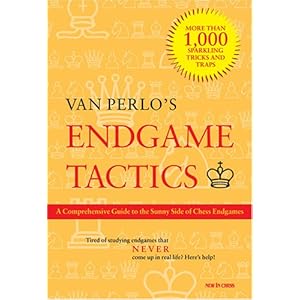
Another important aspect in teaching endgames is inspiring players. If the subject matter comes across as boring, then it will be harder to focus, and may even prevent a player from trying (that's what Keres book did for me). Somehow endgames need to be made interesting, and some books have certainly achieved this. The book that first made an impression on me was Chernev's "Capablanca's Best Chess Endings". In this book, Chernev not only explained the endgames, but made it a personal tribute to Capablanca, who he obviously admired. There is a similarly inspirational book about another world champion, "Vassily Smyslov, Endgame Virtuoso". These books which single out a player and take the way they play a certain aspect of the game are great introductions. They are relatively lightweight giving us an introduction into endgames which would then make a textbook such as Keres' more accessible. Another great book to introduce oneself to endgames is van Perlo's award winning "Endgame Tactics".
Once inspiration has sunk in, players can go about improving their knowledge of specific endgames. Again, I think that books that go from a-z, that is king and pawn versus king through pawn endgames onto queen endgames, rook endgames minor pieces and so forth are not the books to go for. These sorts of books are in my opinion more like reference works. They have their place on a bookshelf, so they can be referred to after an endgame has been played. Actually, I prefer books which jump around a bit and "Silman's Complete Endgame Course" is an excellent example of this.
As you get more and more into endgames, you start to look at more and more types and more theoretical endgames. You also start to see in your games plans early on which have reference to possible endgames which might arise. I have been using 2 resources regularly for quite a while now, that analyse contemporary endgames. In the daily chess newspaper, "Chess Today" GM annotators (especially Alexander Baburin) look at practical endgames regularly. Here the emphasis is most definitely practical as the examples come from real, recent games. However, there is often a theme put to an article (eg recent rook endgames, minor piece endgames from the Olympiad etc) and often the examples are put into their theoretical context. The other great resource is GM Karsten Muller's articles on chess cafe, and chessbase. Again, these are varied and based on practical examples, but placed into a theoretical setting. So you get the best of both worlds, some interesting examples explained in general terms with more concrete theory to back this up. In fact, it would be well worth looking through the archives of chess cafe and going through Muller's old articles. He has written so many that compiled they would become an excellent book on chess endgames.
So, once the epiphany has come about and you realise you have to do something about the endgame, get inspired about the work you are about to undertake. Believe me, once you get into endgames, they are great fun to work on. But you have to get in to them in the first place. So start with a book like van Peerlo's, then move on to something like Silman's, and all the while check through the stuff on chess cafe, and subscribe to a resource like chess today. And best of all, get someone to work with, because it's easier to have a study companion or to work in a group than it is to plough through these on your own....at least to start with. I'll be adding some endgame material on this blog in the future (basically, rehashing my old MCC Endgame Group), which will hopefully be inspirational :)
Of course, the problem with studying endgames is that it is very theoretical and starts from the wrong end of the game! This makes it difficult to apply to our games. As an example, my first book on the endgame was "Practical Chess Endings" by Paul Keres. I was attracted by the title, and knew that Keres was one of the greatest players in chess history. However, I just couldn't get into the book which was laid out in a text book type fashion. Funnily enough, since working on the endgame, I have looked at this book again and realised how good it is. It is an excellent one book compendium taking a player to a competent level of endgame play, but it is not didactic. In fact, I would go as far to say that unless you had some previous knowledge of endgames, the book can be downright boring! And of course, it is not the only endgame book like this.
To learn how to play endgames, most players need to learn theory after general principles. To apply endgame knowledge we must know things such as using a king, restricting our opponent's king, creating passed pawns, defending material, how pieces work together and against other pieces, strong and weak pawns, space and how to create plans. The best set of general principles I've seen are listed on Exeter Chess Club's website. These are pearls of wisdom taken from a number of sources and conveniently placed together.
Another important aspect in teaching endgames is inspiring players. If the subject matter comes across as boring, then it will be harder to focus, and may even prevent a player from trying (that's what Keres book did for me). Somehow endgames need to be made interesting, and some books have certainly achieved this. The book that first made an impression on me was Chernev's "Capablanca's Best Chess Endings". In this book, Chernev not only explained the endgames, but made it a personal tribute to Capablanca, who he obviously admired. There is a similarly inspirational book about another world champion, "Vassily Smyslov, Endgame Virtuoso". These books which single out a player and take the way they play a certain aspect of the game are great introductions. They are relatively lightweight giving us an introduction into endgames which would then make a textbook such as Keres' more accessible. Another great book to introduce oneself to endgames is van Perlo's award winning "Endgame Tactics".
Once inspiration has sunk in, players can go about improving their knowledge of specific endgames. Again, I think that books that go from a-z, that is king and pawn versus king through pawn endgames onto queen endgames, rook endgames minor pieces and so forth are not the books to go for. These sorts of books are in my opinion more like reference works. They have their place on a bookshelf, so they can be referred to after an endgame has been played. Actually, I prefer books which jump around a bit and "Silman's Complete Endgame Course" is an excellent example of this.
As you get more and more into endgames, you start to look at more and more types and more theoretical endgames. You also start to see in your games plans early on which have reference to possible endgames which might arise. I have been using 2 resources regularly for quite a while now, that analyse contemporary endgames. In the daily chess newspaper, "Chess Today" GM annotators (especially Alexander Baburin) look at practical endgames regularly. Here the emphasis is most definitely practical as the examples come from real, recent games. However, there is often a theme put to an article (eg recent rook endgames, minor piece endgames from the Olympiad etc) and often the examples are put into their theoretical context. The other great resource is GM Karsten Muller's articles on chess cafe, and chessbase. Again, these are varied and based on practical examples, but placed into a theoretical setting. So you get the best of both worlds, some interesting examples explained in general terms with more concrete theory to back this up. In fact, it would be well worth looking through the archives of chess cafe and going through Muller's old articles. He has written so many that compiled they would become an excellent book on chess endgames.
So, once the epiphany has come about and you realise you have to do something about the endgame, get inspired about the work you are about to undertake. Believe me, once you get into endgames, they are great fun to work on. But you have to get in to them in the first place. So start with a book like van Peerlo's, then move on to something like Silman's, and all the while check through the stuff on chess cafe, and subscribe to a resource like chess today. And best of all, get someone to work with, because it's easier to have a study companion or to work in a group than it is to plough through these on your own....at least to start with. I'll be adding some endgame material on this blog in the future (basically, rehashing my old MCC Endgame Group), which will hopefully be inspirational :)
Labels:
Capablanca,
Chess,
chess cafe,
chess today,
chessbase,
Endgames,
exeter chess club,
Keres,
muller,
silman,
smylov,
van perlo
Wednesday, October 3, 2012
Melbourne Chess Club Open
I've been playing in this tournament, though as I'm on holiday it doesn't really seem that much has been happening. In fact, the tournament has settled into a pattern resembling the Club Championship. Dusan Stojic has raced to 4/4 and leads a pack of players of which Guy West is the top seed. Guy and Dusan are yet to play, and that may once again be the clincher for this tournament, though as we've only had 4 rounds it is a bit early to be predicting things like that.
Dusan has beaten myself and IM Mirko Rujevic in consecutive rounds to lead the field. In my game, I thought the position was dead level, and then realised I was virtually in zugzwang after about 15 moves, took about 30 minutes to come up with a bad move and was slaughtered about 10 moves later.
Here, Dusan as black coolly played 15..b6, reinforcing his queen side and I spent 30 minutes realising that my position was bad. I had many ways to lose material, but I decided to maintain a material balance and give my opponent a quick win on the dark squares. I have to admit, his knights in this game were absolutely awesome.
I bounced back this week with a long, hard, struggle against Paul Kovacevic on the black side of a Queen's Gambit Exchange. Paul made the same mistake as I did against Dusan, playing a little passively at the end of the opening. But it puts me on 3/4 which I'm pretty happy with. I'm alongside some very good players, IM's West and Rujevic, Malcolm Pyke, Ari Dale and surprise package Jason Chew who had a great victory last week against David Beaumont.
Dusan is one point clear of all of us, but in the middle is M. Dizdarevic on 3.5. It's good to see Mehmedalija at the club, as this is his first tournament here this year. The tournament is getting good coverage on Kerry Stead's blog, and Kerry is as ever doing a great job as arbiter!
Dusan has beaten myself and IM Mirko Rujevic in consecutive rounds to lead the field. In my game, I thought the position was dead level, and then realised I was virtually in zugzwang after about 15 moves, took about 30 minutes to come up with a bad move and was slaughtered about 10 moves later.
Here, Dusan as black coolly played 15..b6, reinforcing his queen side and I spent 30 minutes realising that my position was bad. I had many ways to lose material, but I decided to maintain a material balance and give my opponent a quick win on the dark squares. I have to admit, his knights in this game were absolutely awesome.
I bounced back this week with a long, hard, struggle against Paul Kovacevic on the black side of a Queen's Gambit Exchange. Paul made the same mistake as I did against Dusan, playing a little passively at the end of the opening. But it puts me on 3/4 which I'm pretty happy with. I'm alongside some very good players, IM's West and Rujevic, Malcolm Pyke, Ari Dale and surprise package Jason Chew who had a great victory last week against David Beaumont.
Dusan is one point clear of all of us, but in the middle is M. Dizdarevic on 3.5. It's good to see Mehmedalija at the club, as this is his first tournament here this year. The tournament is getting good coverage on Kerry Stead's blog, and Kerry is as ever doing a great job as arbiter!
Subscribe to:
Posts (Atom)